
A disorderly linen closet often becomes the catch-all repository for misshapen fitted sheets, mismatched pillowcases, and faded bath towels that no one reaches for. Opening a hallway cupboard only to be greeted by precarious fabric avalanches introduces needless friction into otherwise peaceful household routines. Organizing your linen closet is not about achieving sterile, catalog-perfect uniformity; it is about paring down your textiles to what you genuinely use, establishing breathable storage zones, and creating a calm, predictable order that makes making beds and welcoming guests completely effortless.
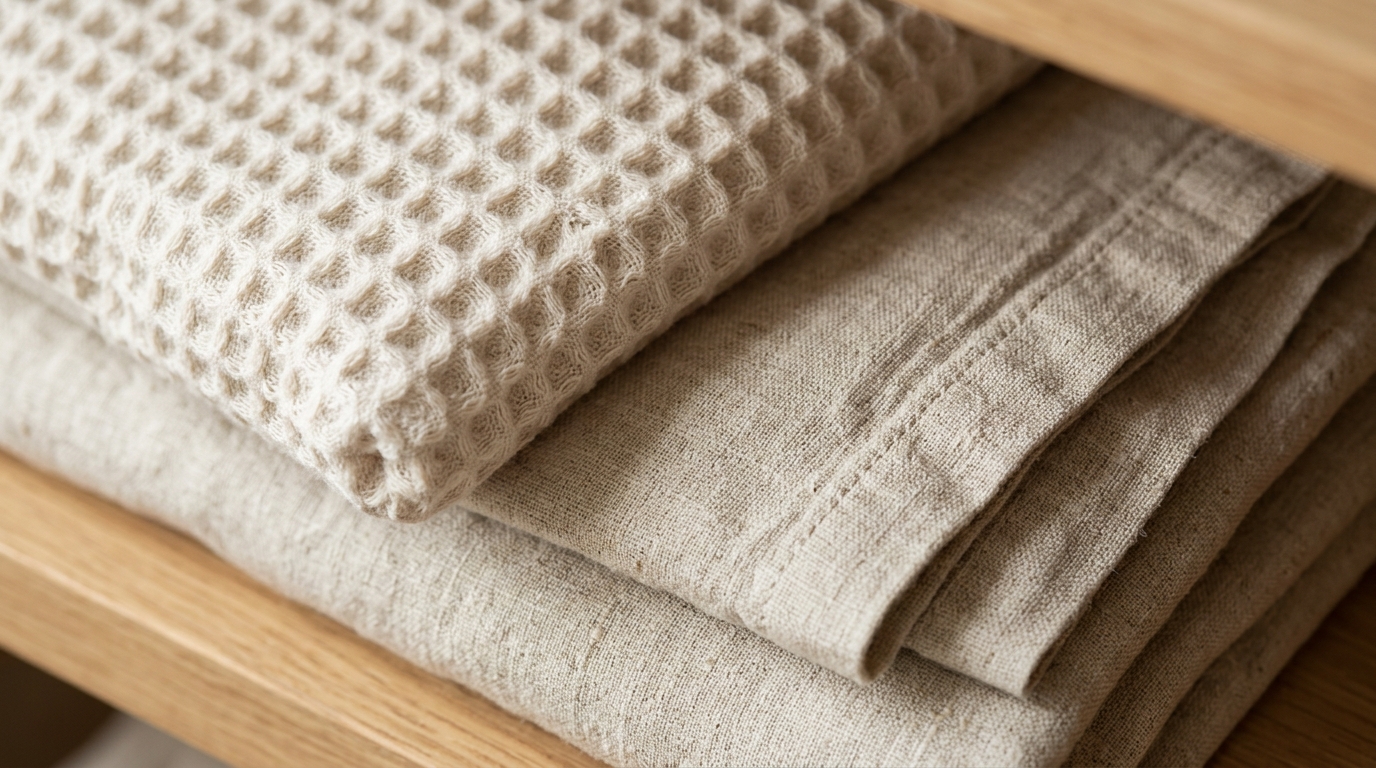
When approaching linen organization, the secret lies in categorizing by room and frequency rather than shoving everything onto whichever shelf happens to have empty space. By adopting a straightforward folding technique for cumbersome fitted sheets, introducing breathable seagrass baskets for loose items, and placing natural cedar and lavender to protect natural fibers, you can turn a cramped storage cupboard into one of the most functional spaces in your home. Here is our step-by-step blueprint for a complete linen closet reset.
Emptying Shelves & Assessing the True Volume of Linens
The cardinal rule of any lasting home reset is to never organize in place. Shuffling stacks around on existing shelves simply rearranges clutter. Set aside ninety minutes on a weekend morning and commit to a complete cleanout:
- Clear Every Single Shelf: Bring every towel, sheet set, pillow protector, and duvet cover out into a bright room and spread them across a clean bed or folding table. Seeing the full volume in daylight immediately clarifies how many duplicate items have accumulated over the years.
- Vacuum and Wipe Down Surfaces: Hallway closets rarely enjoy adequate airflow and tend to collect lint, dust bunnies, and wood particles in corners. Vacuum each shelf thoroughly with a brush attachment, then wipe down painted or wood surfaces with a damp microfiber cloth and a drop of dish soap. Let the shelves air-dry completely before returning any textiles.
- Audit Shelf Heights: If your closet features adjustable shelving, measure your tallest storage baskets now. Positioning your primary everyday shelf at chest height will prevent repetitive reaching and bending during daily laundry rotations.
The Curation Filter: Discarding Stained Towels & Worn Sheets
Most households store far more bed and bath linens than their beds actually require. Paring back to a realistic rotation frees up substantial shelf space and makes laundering far simpler to manage:
- The Rule of Two (Plus One for Guests): For each bed in your home, you realistically need only two complete sheet sets—one on the bed, and one clean set resting in the closet. If you host overnight guests regularly, keep one dedicated guest set stored in a labeled basket. Anything beyond this typically gathers dust and takes up valuable vertical real estate.
- The Towel Quota: Allocate two bath towels, two hand towels, and two washcloths per family member, plus four neutral bath towels set aside for visitors. For more textile decluttering guidance, review our closet decluttering guide.
- Responsible Repurposing: Linens with torn elastic, permanent bleach stains, or threadbare centers should never be returned to the closet. Cut frayed towels into reusable garage cleaning rags, or bundle clean worn sheets and donate them to your local animal rescue shelter, where soft bedding is always in high demand.

The Fitted Sheet Folding Method & Space-Saving Stacking
Fitted sheets are notorious for turning into bulky, rounded bundles that slide off shelves and destabilize neighboring stacks. Mastering this simple 30-second corner-tucking technique transforms awkward elastic into crisp, flat rectangular packages:
How to Fold a Fitted Sheet Flat
- Nest the Corners: Stand holding the sheet length-wise. Place your hands inside the two top corners. Fold one corner over the other so both nested corners sit in your right hand. Repeat for the bottom two corners, then bring all four corners together into one hand.
- Form a Rectangle: Lay the sheet flat on a wide table or clean mattress. Smooth the gathered curved edges inward until the fabric forms a clean, flat rectangle with straight outer edges.
- Fold in Thirds: Fold the outer edges lengthwise into thirds to create a long, narrow strip of fabric, then fold the strip in thirds crosswise into a compact, firm rectangle.
The Pillowcase Bundle Hack: Once your fitted sheet and flat sheet are folded, slide both neatly inside one of the set’s matching pillowcases. This ingenious trick creates a self-contained, book-like fabric bundle for each bed. When it is time to strip the bed, you simply grab one neat packet containing everything you need without hunting for matching pieces. For seasonal bedding layering inspiration, see our guide on how to layer bedding for fall.

Breathable Baskets, Shelf Dividers & Fabric-Safe Labels
Open shelving benefits immensely from physical boundaries that prevent piles from leaning into one another. Incorporating natural storage containers keeps smaller essentials contained and visually calm:
- Opt for Breathable Materials: Natural fabrics require adequate ventilation to prevent musty odor buildup. Choose open-weave seagrass, cotton rope, or wire mesh storage baskets lined with unbleached cotton. Avoid airtight plastic storage bins for natural fibers like cotton, linen, and wool, as trapped ambient moisture can lead to yellowing over time.
- Acrylic or Wire Shelf Dividers: Slip clear acrylic dividers onto wooden shelves spaced 12 to 14 inches apart. These create sturdy vertical bookends that keep stacks of fluffy bath sheets standing upright and prevent piles from toppling when a lower towel is retrieved.
- Clip-On Basket Labels: Use simple brass or matte black bookplate clips with cardstock labels denoting bed sizes (e.g., “Master King Linens”, “Guest Queen Bedding”, “Bath Sheets”, “Spare Pillowcases”). Clear labeling ensures that every member of the household returns clean laundry to its rightful container.

Natural Scent Sachets & Long-Term Fabric Protection
Enclosed closets can develop a stale, enclosed atmosphere over time. Relying on gentle, time-tested natural aromatics protects delicate textiles from pests while imparting a fresh, clean scent throughout your cupboard:
- Natural Red Cedar Blocks: Place solid aromatic cedar blocks or hanging rings on closet shelves. Cedar contains natural aromatic resins that deter fabric moths and insects without the harsh, chemical odor of commercial mothballs. When the cedar scent fades after several months, lightly buff the wood surface with fine-grit sandpaper to release fresh natural oils. Learn more fabric care techniques in our knitwear and wool care guide.
- Dried French Lavender Sachets: Tuck small, breathable cotton or muslin bags filled with whole dried lavender flowers between towel stacks and inside sheet baskets. The subtle herbal aroma infuses fabrics naturally, releasing gentle freshness every time you smooth a clean sheet over your mattress.
- Homemade Botanical Linen Mist: Keep a 4-ounce amber spray bottle filled with distilled water and a splash of witch hazel scented with ten drops of sweet orange and lavender oils in the closet. Lightly misting sheets thirty seconds before folding relaxes stubborn creases and leaves linens smelling crisp.
Troubleshooting Clutter Creep & Seasonal Rotation Rhythms
How do I prevent the bottom of stacks from sitting unused for months?
Adopt the “bottom-load, top-pull” laundry rule. When returning fresh laundry from the dryer, place clean folded towels and pillowcases at the very bottom of the stack, pulling current use items from the top. This simple rotation ensures every towel wears evenly over time and prevents bottom linens from yellowing.
Where should heavy winter duvets and extra bed pillows be stored?
Reserve the highest closet shelf (or the floor level beneath the lowest shelf) for bulky off-season items like down comforters, heavy wool throws, and spare guest pillows. Always pack them into breathable 100% cotton canvas zippered storage bags rather than plastic vacuum-seal bags, which can crush delicate down clusters and trap residual humidity.
How often should a linen closet be refreshed?
A quick five-minute tidy during your weekly laundry routine keeps stacks aligned. Perform a thorough 20-minute seasonal audit twice a year—once in autumn when swapping in flannel sheets, and once in spring when transitioning to lightweight percale. Make this part of your mindful Sunday reset routine.
Save This Linen Closet Organization Guide to Pinterest
Linen Closet Organization Ideas for a Calm Home
Save this practical organizing checklist to your Pinterest Home Organization or Cozy Home board. Learn how to fold fitted sheets flat, organize towels in baskets, and declutter hallway shelves with ease.
Leave a Comment