
There is a distinct comfort in reaching for a favorite wool or cashmere sweater on the first crisp morning of autumn. Yet after a few weeks of daily wear under heavy coats and against office desks, even the finest yarns begin to show small surface fuzz and stubborn pills. Learning how to care for wool sweaters at home does not require complicated equipment or frequent trips to the dry cleaner; it simply takes an intentional five-piece toolkit and ten quiet minutes to restore soft knitwear to its clean, smooth finish.
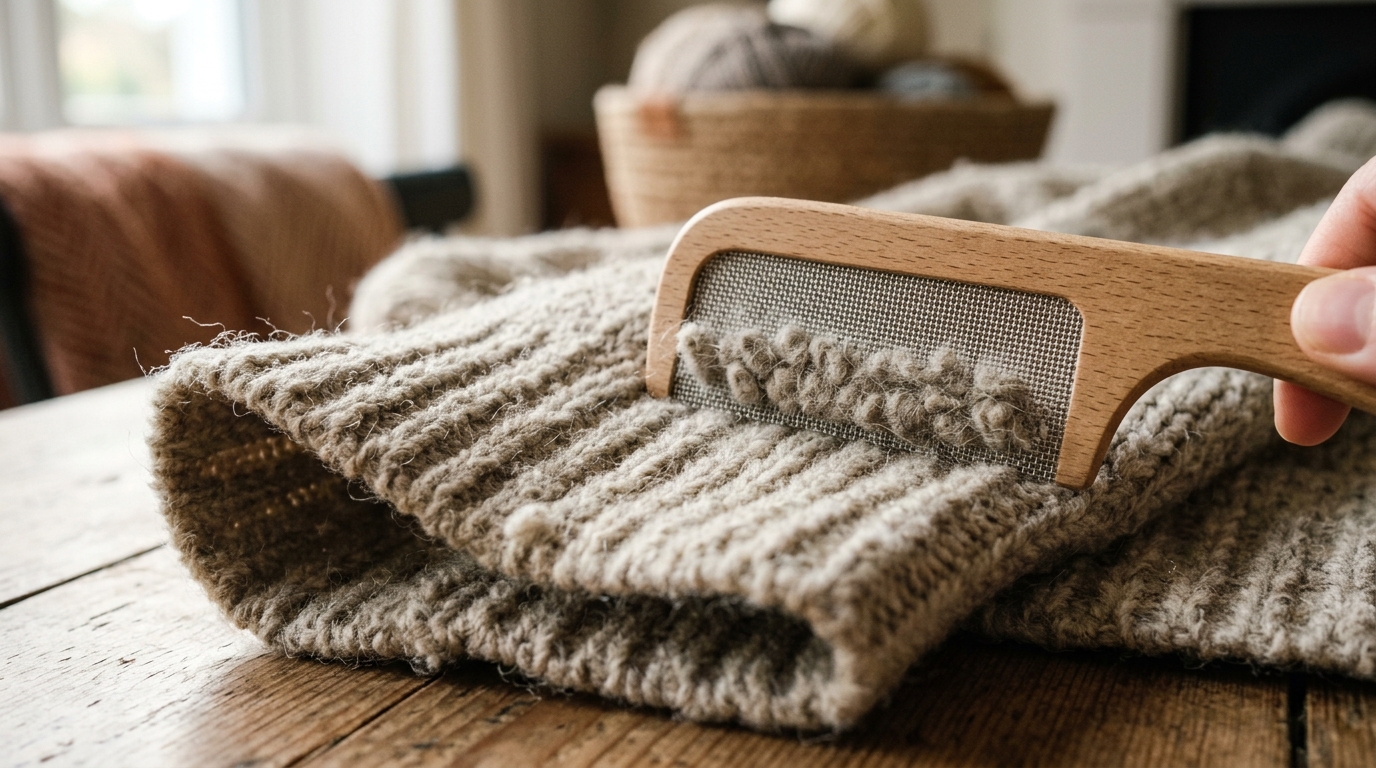
In a world of fast-moving consumer trends, caring for the clothes you already own is an act of grounded, sustainable living. When you invest care into natural wool, alpaca, and cashmere, these garments reward you with warmth and longevity that endure for decades. Taking time on a slow Sunday afternoon to depill, brush, and neatly fold your knitwear turns simple clothing maintenance into a calming seasonal ritual.
Why Sweaters Pill (and Why It Is Completely Normal)
Many people assume that surface pilling is a sign of cheap fabric or poor craftsmanship, but the opposite is often true. Natural wool, merino, and cashmere consist of short, delicate animal fibers spun together into yarn. With friction—such as your arms rubbing against your torso, the strap of a tote bag resting on your shoulder, or a coat lining brushing your elbows—these short fibers gradually loosen, work their way to the surface, and tangle into tiny balls.
- Friction Points: Cuffs, underarms, and hip seams experience the highest movement and naturally develop fuzz first.
- Fiber Softness: Softer, finer yarns like baby alpaca and grade-A cashmere have shorter individual fiber lengths, meaning they naturally shed loose fuzz more readily than coarse sheep wool.
- First-Season Shedding: Brand-new knitwear often sheds loose surface fibers during its first few wears. Once these initial loose ends are gently cleared away, pilling decreases significantly.
The 5-Piece Knitwear Care Kit Essentials
Assembling a dedicated sweater care kit keeps everything you need within arm’s reach whenever a favorite piece needs refreshing. These five thoughtful tools protect delicate yarns without damaging the underlying structure:

| Tool | Best For | How to Use |
|---|---|---|
| Beechwood Cashmere Comb | Fine-gauge knits, pure cashmere, and delicate merino wool | Hold comb at a 45-degree angle; glide gently downward along the knit grain with light, steady pressure. |
| Electric Fabric Defuzzer | Chunky fisherman knits, heavy wool cardigans, and wool-blend coats | Move the shaving head in small circular motions flat against the fabric without pressing down hard. |
| Aromatic Red Cedar Blocks | All wool, cashmere, and natural fiber seasonal storage | Place beside folded sweaters on shelves or in storage bins; lightly sand every season to refresh natural oils. |
| pH-Neutral Wool Wash | Hand-washing delicate woolens and spot cleaning cuffs | Use cool water with a few drops of detergent; submerge gently without wringing or twisting fibers. |
| Collapsible Mesh Drying Rack | Drying hand-washed sweaters flat with 360-degree airflow | Reshape damp garments onto the mesh surface away from direct heat sources to dry evenly without stretching. |
Step-by-Step Guide: How to Depill a Sweater Like a Pro
Depilling takes only a few minutes per garment, but rushing can lead to accidental snags or thinned fabric. Follow this measured process for pristine results:
1. Lay the Garment on a Firm, Flat Workstation: Never try to shave or comb a sweater while wearing it or while it rests on an uneven soft mattress. Spread the garment flat on a clean wooden tabletop or ironing board so the fabric remains completely taut and level.
2. Anchor the Fabric Taut with Your Non-Dominant Hand: Smooth out any ripples or creases under the section you are treating. Holding the wool gently taut prevents the edge of a comb or the rotating blades of a shaver from catching loose stitches.

3. Work in Small, One-Directional Strokes: If using a cashmere comb, angle it at roughly 45 degrees and skim the surface in short downward motions. You will feel the brass mesh catch the fuzz. After every three or four strokes, peel the collected fuzz from the comb teeth and discard it.
4. Use a Gentle Hand with Electric Shavers: When using an electric fabric shaver, let the weight of the device do the work. Pressing down firmly into the fabric forces knit loops into the cutting chamber, which can slice through yarn threads and cause small holes. Keep the head skimming smoothly across the surface.
5. Finish with Light Fabric Steam: After depilling, hold a handheld steamer two inches away from the wool and allow gentle steam to pass through the fibers. This relaxes compressed yarns and causes the natural wool pile to fluff up softly.
4 Seasonal Storage Habits to Keep Sweaters Like New
Proper storage prevents 80% of knitwear damage before it ever begins. Pairing these simple habits with your seasonal fall wardrobe declutter guide keeps your closet organized and serene:

1. Never Hang Chunky Woolens on Hangers: Gravity is the enemy of knitted garments. Hanging a heavy sweater pulls the shoulder seams out of shape and creates unsightly “hanger bumps” that are difficult to steam out. Always fold sweaters gently and store them flat.
2. Keep Stacks Under Four Garments High: Avoid piling eight or nine heavy knits on top of each other. High stacks compress bottom sweaters, crushing the air pockets that give wool its natural insulating warmth. Limit stacks to three or four pieces, placing heavier aran knits at the bottom and featherweight cashmere on top.
3. Use Cedar Instead of Synthetic Chemical Balls: Fabric moths are drawn to woolens stored in dark, quiet corners. Avoid harsh synthetic mothballs that leave an overpowering odor; instead, tuck solid red cedar blocks or dried lavender sachets between shelf tiers. Lightly sand cedar blocks with fine sandpaper once a year to release fresh natural cedar oils.
4. Build a Cohesive Weekly Maintenance Rhythm: Rather than letting pills accumulate over an entire winter, inspect one or two knits during your regular Sunday reset routine checklist. Tending to garments as you wear them ensures your wardrobe curated from our fall capsule wardrobe checklist stays immaculate all season long.
Frequently Asked Questions
Should I choose a sweater comb or an electric fabric shaver?
Both tools serve complementary roles. A wooden cashmere comb is ideal for fine, tight knits like merino and lightweight cashmere because it offers maximum tactile control. An electric shaver works best on chunky, textured woolens, cable-knits, and wool coats where manual combing would be slow and tiring.
How often should I depill my wool sweaters?
Most natural woolens only require depilling two to three times per season. After you clear away the initial surface fuzz in early autumn, natural fibers stabilize and shed far less frequently.
Can I wash wool and cashmere sweaters in the washing machine?
While some modern machines feature a gentle wool cycle, hand-washing in a basin of cool water with a few drops of pH-neutral wool wash remains the safest method. Press out excess water between clean, dry bath towels without wringing, then lay the sweater flat to dry on a breathable mesh rack.
Pin This Knitwear Care Guide for Later
Love keeping your autumn wardrobe calm, organized, and beautiful? Save this guide to your Pinterest lifestyle board so you always have these gentle sweater care tips on hand!
Leave a Comment