
When brisk autumn evenings arrive and the leaves outside begin to turn, the bed becomes the undisputed sanctuary of the home. Yet transitioning your sleep space for the colder months is rarely as simple as throwing one heavy synthetic comforter over summer sheets. Learning how to layer bedding for fall is about building thoughtful, breathable tiers of natural textiles that adapt to shifting nighttime temperatures, keeping you warm and snug without feeling stifled or overheated.
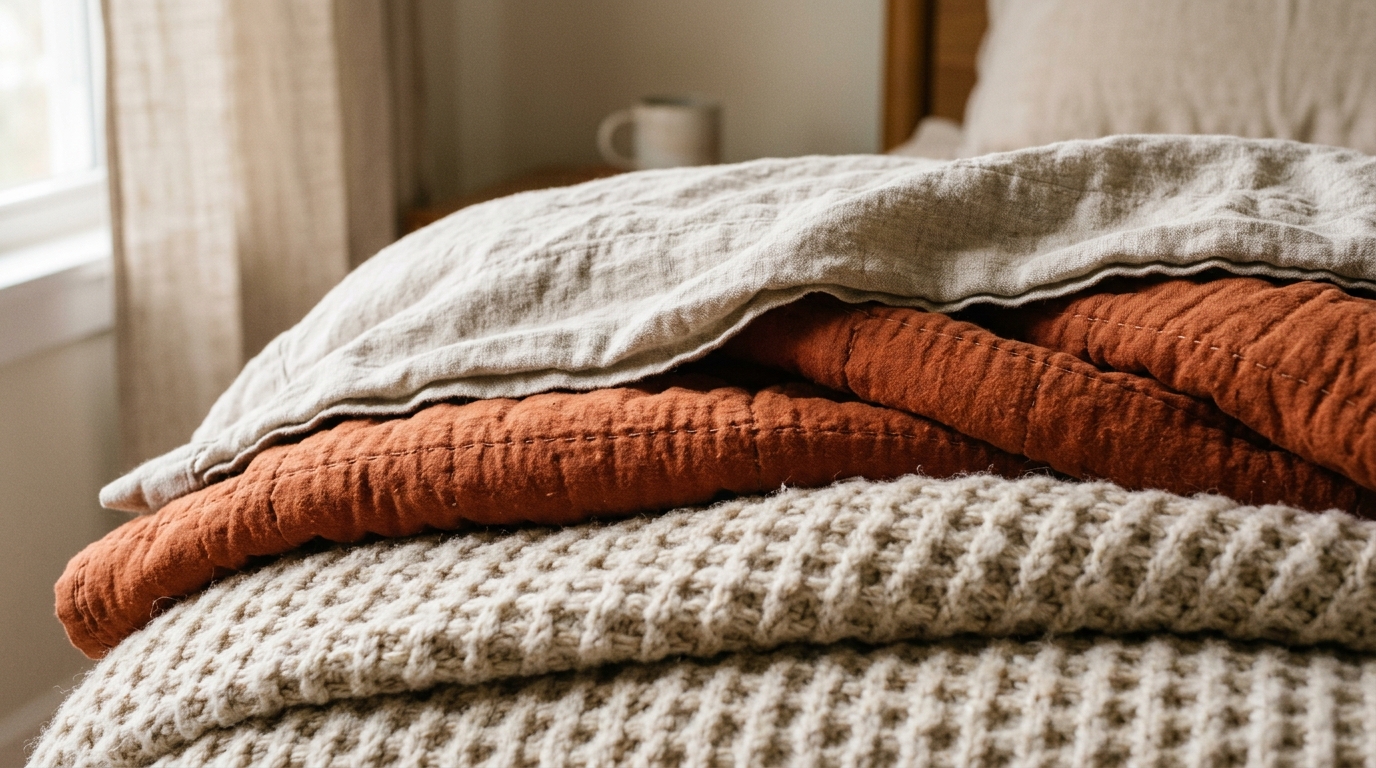
There is a distinct, quiet pleasure in climbing into a bed layered with intention. By combining lightweight sheets with a versatile coverlet and an insulating duvet, you create a customizable sleep environment that easily shifts between balmy early October nights and chilly November frosts. With a few considered styling habits and natural fibers, you can turn your bedroom into an inviting retreat that encourages slower mornings and deeply restful evenings.
Why Breathable Layers Matter More Than Heavy Blankets
Many people assume that cold-weather comfort requires the heaviest blanket available, but single dense covers often trap excess body heat and lead to restless tossing and turning. Creating multiple lighter layers provides tangible benefits for sleep quality and home ambiance:
- Effortless Temperature Adjustment: Layering allows you to peel back or pull up individual blankets throughout the night as your room cools down.
- Superior Breathability: Natural fibers like washed linen, organic cotton percale, and wool allow airflow between weaves, preventing stuffy humidity from building up beneath the covers.
- Sensory Visual Depth: Folding contrasting textiles back creates the plush, welcoming appearance of a boutique hotel bed in your everyday home.
- Seamless Seasonal Flow: An intentionally made bed pairs naturally with our restorative Sunday night unwind routine, signaling to your senses that the day is done.
The 5-Tier Autumn Bedding Anatomy
Building a comfortable autumn bed is all about stacking complementary weights and weaves. Here is the foundational anatomy of a well-layered seasonal bed:

| Bedding Tier | Recommended Fabric | Functional Seasonal Purpose |
|---|---|---|
| 1. Base Fitted Sheet | Washed European flax linen or crisp organic cotton percale | Provides a soft, breathable foundation against your skin that softens with every wash cycle. |
| 2. Flat Top Sheet | Matching washed linen or lightweight combed cotton | Acts as a protective barrier that keeps duvets clean while offering a featherweight cover for milder nights. |
| 3. Quilted Coverlet | Stitched cotton matelassé or lightweight linen quilt | Adds structured mid-weight warmth and introduces geometric or quilted texture across the bed. |
| 4. Lofty Duvet | Medium-warmth down or down-alternative insert in a linen cover | Delivers cloud-like loft and primary thermal insulation against chilly autumn room drafts. |
| 5. Accent Foot Throw | Chunky wool knit, brushed alpaca, or heavy honeycomb waffle | Provides quick targeted warmth for cold feet and grounds the overall visual styling at the bed’s base. |
Step-by-Step Walkthrough: How to Style a Cozy Autumn Bed
Transforming your bed into a plush retreat takes less than ten minutes each morning. Follow this measured assembly process for a balanced, effortlessly relaxed look:
1. Smooth the Base Fitted and Flat Sheets: Pull your fitted sheet snug across the mattress. Lay your flat sheet with the finished top hem facing downward, pulling it up to meet the headboard. When you fold the sheets down later, the decorative border will face upright.
2. Spread the Quilted Coverlet Over the Full Mattress: Lay your lightweight quilt or coverlet smooth across the sheets, pulling it up to roughly six inches below the headboard. Fold the flat sheet and quilt back together in one clean, crisp fold to expose the pillows.

3. Fold the Fluffy Duvet in Thirds at the Foot: Rather than pulling your thick duvet all the way to the headboard, fold it into a horizontal accordion or S-fold across the lower third of the mattress. This technique creates a lavish, lofty appearance while keeping the upper half of the bed lightweight for early evening lounging.
4. Style Pillows in Relaxed Tiers: Place your standard sleeping pillows flat against the headboard in matching neutral linen cases. Stand two European square shams in front of them in a coordinating accent tone, finishing with a single textured lumbar pillow centered in front.
5. Drape an Accent Throw for Casual Warmth: Loosely fold a chunky waffle blanket or wool throw and drape it diagonally across the foot of the bed. This unstudied, lived-in touch invites you to curl up during a quiet afternoon following our cozy rainy day routine.
4 Daily Rhythms for a Serene Bedroom Sanctuary
Maintaining a peaceful sleeping space is about gentle, regular care rather than rigid perfection. These four simple habits keep your autumn bedroom fresh and inviting:

- Air the Bed for 15 Minutes Every Morning: Pull the covers all the way down to the foot of the bed when you wake up and crack a window. Letting moisture dissipate before making the bed keeps natural fibers fresh and odor-free.
- Rotate Between Warm and Cool Sides: Flip your pillows and rotate your duvet insert once a month so down or microfiber clusters remain evenly distributed.
- Maintain a Clutter-Free Nightstand: Clear excess paperwork, chargers, and glasses from your bedside table, leaving only a gentle reading lamp and a current book to support your autumn evening routine for restorative sleep.
- Store Extra Blankets in Breathable Baskets: Keep spare wool throws neatly rolled in a woven seagrass basket in the corner of the room, as outlined in our fall wardrobe declutter guide.
Frequently Asked Questions
Should I choose linen or flannel sheets for autumn?
Washed linen is generally the superior year-round choice because its hollow flax fibers naturally regulate temperature, keeping you warm in cool weather without trapping moisture. Flannel is wonderfully cozy but can easily cause overheating if you use a lofty down duvet.
How do I wash and care for layered linen bedding?
Wash natural linen on a gentle cycle in lukewarm or cool water with a mild detergent. Tumble dry on low heat and remove while still slightly damp, or hang dry to preserve linen’s signature relaxed texture without stiff wrinkles.
What is the best color palette for fall bedding?
Warm, earthy neutrals create an effortless autumn mood. Start with an oatmeal, flax, or warm cream base, then layer in accents of terracotta, muted rust, cinnamon, olive green, or dusty camel through your quilt and accent pillows.
Pin This Bedding Layering Guide for Later
Ready to transform your bedroom into a cozy autumn sanctuary? Save this guide to your Pinterest lifestyle board so you have these layering steps whenever the cold weather arrives!
Leave a Comment