
There is a distinct comfort in climbing into a bed layered with crisp, freshly scented sheets at the end of a busy autumn day. While washing your duvet covers and pillowcases every few days isn’t always practical, a gentle homemade linen spray offers a simple way to refresh bedroom textiles between laundry cycles. Formulated with witch hazel, distilled water, and pure botanical essential oils, this natural fabric mist leaves bed linens smelling clean and subtly aromatic without the heavy synthetic chemical perfumes found in commercial fabric sprays.
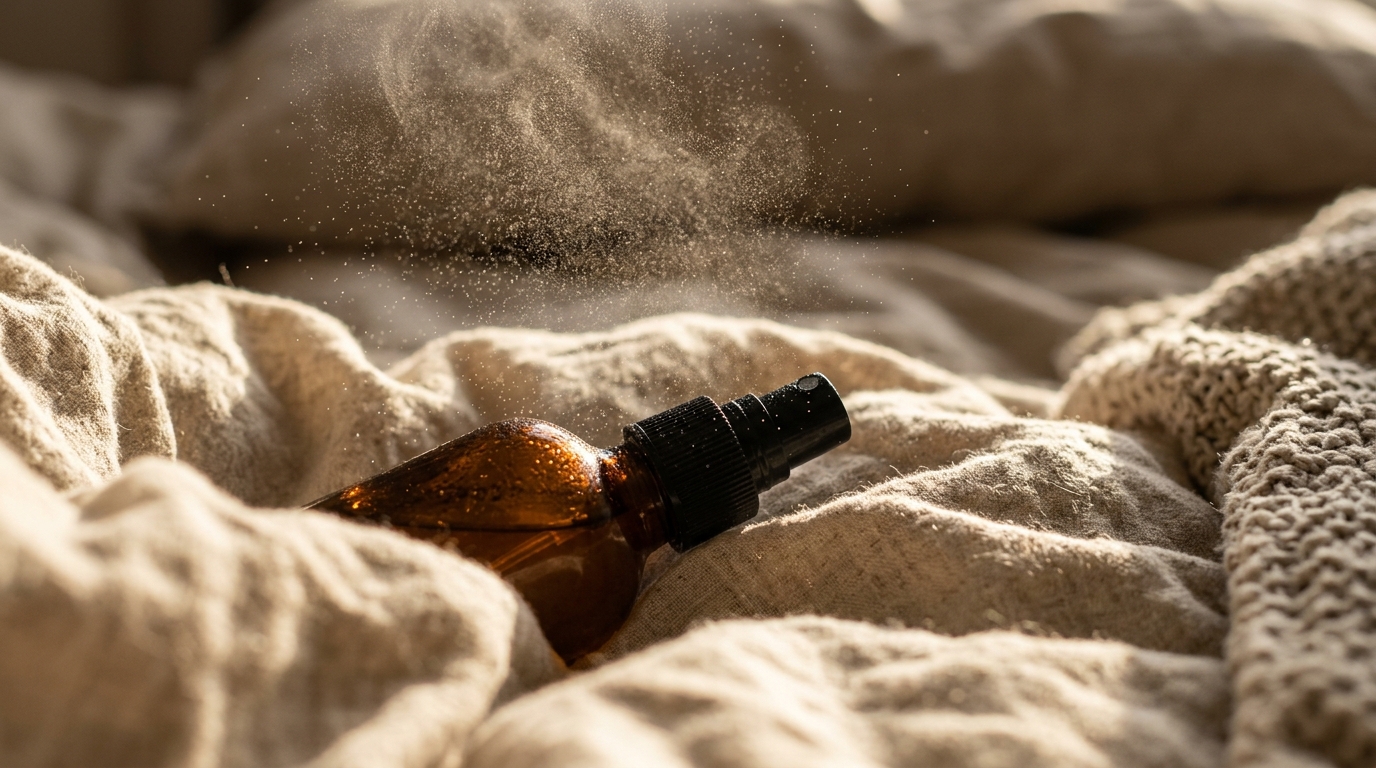
Unlike store-bought aerosol fresheners that contain artificial fragrances and chemical preservatives that can irritate sensitive skin, a DIY linen spray allows you to tailor the scent strength completely. Because it relies on quick-drying witch hazel rather than heavy carrier oils, it evaporates cleanly within seconds, preventing dampness or water rings on delicate natural fibers. Here is our tested, beginner-friendly method for making natural linen spray at home.
Why Homemade Linen Sprays Are Gentler on Fabrics Than Synthetic Sprays
Commercial fabric refreshers often promise long-lasting fragrance, but the ingredients responsible for that lingering scent can cause issues for home textiles:
- Zero Synthetic Coating Agents: Store-bought sprays often contain silicone-based softeners and binding resins designed to trap synthetic perfume molecules on fabric fibers. Over time, these coatings accumulate on cotton and linen, reducing breathability.
- Gentle on Sensitive Skin: Pillowcases rest directly against our facial skin for seven to eight hours every night. A natural formula free of synthetic dyes and artificial fixatives is much gentler for nightly rest.
- Fast, Spot-Free Evaporation: Witch hazel acts as a mild, volatile solvent that lowers the surface tension of water, allowing fine mist droplets to disperse and dry in under two minutes without leaving rings. Compare this with our room mists in the diy fall room spray guide.
The Core Ingredients: Witch Hazel, Distilled Water & Emulsifiers
An effective linen spray relies on three simple, accessible ingredients working together:

- Distilled Water (1.5 Cups): Using distilled water instead of tap water is crucial. Tap water contains calcium, magnesium, and trace minerals that can leave chalky rings on dark duvet covers and cause bacterial growth over time.
- Witch Hazel or High-Proof Spirit (1/2 Cup): Witch hazel acts as an organic dispersant and preservative. It breaks down the surface tension of the essential oils so they blend evenly throughout the water rather than floating in large oily beads.
- Pure Botanical Essential Oils (25 to 30 Drops): Select genuine, steam-distilled plant oils. Because they evaporate completely, they provide clean, authentic scent without sticky residues. For seasonal scent inspiration, see our diy soy wax melts tutorial.
- Fine-Mist Spray Bottle: Always choose a spray nozzle that produces an ultra-fine cloud rather than a heavy streaming spray, ensuring even fabric coverage without soaking.
3 Tested Essential Oil Blends for Bedding (Lavender, Bergamot & Cedar)
Different rooms and seasons call for different aromatic notes. Here are three tested scent blends for a standard 16-ounce spray bottle:
Blend 1: Classic Evening Lavender & Chamomile
The quintessential bedtime aroma. Herbal, clean, and grounding for nighttime pillows and sheets.
- 16 drops French lavender essential oil
- 8 drops Roman chamomile oil
- 4 drops atlas cedarwood oil (adds warm woody depth)
Blend 2: Crisp Bergamot & Sweet Orange Morning Refresh
Ideal for morning bed-making and freshening living room throw blankets after guests depart.
- 14 drops bergaptene-free bergamot essential oil
- 10 drops sweet orange essential oil
- 4 drops frankincense essential oil
Blend 3: Warm Cedar & Vanilla Blanket Mist
Cozy and rustic. Excellent for heavy autumn wool throws and flannel sheets.
- 14 drops atlas cedarwood oil
- 8 drops pure vanilla oleoresin
- 6 drops sweet orange oil
Step-by-Step Bottle Assembly & Proper Dilution Walkthrough
Making a batch takes under two minutes. Follow this exact order of operations to ensure clean emulsification:

1. Prepare an Amber Glass Bottle: Use a clean 16-ounce glass bottle with a fine-mist trigger or pump sprayer. Dark amber or cobalt glass protects the volatile essential oils from sunlight degradation.
2. Add Witch Hazel and Essential Oils First: Pour 1/2 cup of witch hazel directly into the bottle. Add your chosen essential oils (25 to 30 drops total). Swirl the bottle gently for 20 seconds. Allowing the oils to contact the witch hazel before adding water helps disperse the aromatic oils evenly.
3. Top with Distilled Water: Pour in 1.5 cups of distilled water, leaving approximately one inch of headspace at the top so there is room to shake the mixture.
4. Shake Before Each Use: Secure the spray top tightly. Because this recipe contains no synthetic polysorbate chemicals, give the bottle a gentle 3-second shake before each use to redistribute the botanical droplets.
How to Mist Linens Correctly to Prevent Water Spots or Staining
Applying linen spray correctly ensures fabrics stay fresh without becoming damp:

- Maintain Proper Distance (12 to 18 Inches): Spraying too close to fabric concentrates liquid in one spot, which can leave a temporary damp mark. Holding the bottle at arm’s length lets the mist spread out into a fine, even veil.
- Give It 10 Minutes to Settle: Mist your pillowcases and sheets approximately 10 to 15 minutes before bedtime as part of your fall night routine. This allows the fine moisture to evaporate completely while the calming botanical aroma lingers in the weave.
- Spot-Test Delicate Silk: While this spray is safe on cotton, linen, wool, and flannel, always perform a small test spray on an inconspicuous corner of delicate silk or satin pillowcases first.
- Avoid Heavily Tinted Oils: Do not use deep blue tansy or dark patchouli oils on crisp white sheets, as natural plant pigments can cause subtle discoloration. Stick to clear or pale oils like lavender, bergamot, cedarwood, and frankincense.
Where to Use Linen Spray Beyond Pillows (Curtains, Closets & Throws)
While designed for bedding, this versatile botanical spray can refresh soft surfaces throughout your home:
- Linen Closets & Folded Towels: Spritz freshly folded sheet sets and bath sheets before storing them away in your cupboard using our linen closet organization guide to keep stored linens smelling clean for months.
- Layered Autumn Blankets: Lightly mist heavy waffle blankets and quilts layered on your bed, as shown in our how to layer bedding for fall guide.
- Drapery & Fabric Window Curtains: Mist living room curtains on a breezy autumn afternoon. As air circulates through open windows, it carries the gentle herbal fragrance across the room.
- Cloth Upholstered Chairs & Sofas: Lightly mist sofa cushions and fabric armchairs before hosting weekend gatherings.
- Shelf Life: Stored in an amber glass bottle at room temperature, this homemade linen spray will keep fresh and effective for 4 to 6 months.
Save This DIY Linen Spray Recipe to Pinterest
Love simple, natural home rituals that make daily life feel cozier? Save this DIY linen spray tutorial to your Pinterest natural living or bedroom decor board so you have the ratios ready whenever you make the bed!
Mixed this up yesterday afternoon for our weekly cleaning reset! Leaves our oak dining table and coffee table with such a clean, natural matte finish without that sticky synthetic residue commercial sprays leave behind. Plus the citrus-cedar aroma makes the whole living room feel so peaceful.
How long does this homemade cleaner stay fresh without artificial preservatives?
Because it uses distilled water, a splash of vinegar, and natural essential oils, it stays fresh and potent for about 4 to 6 weeks at room temperature in an amber glass spray bottle. Shake gently before each use!