
Traditional autumn wreaths are often dense, heavy, and overloaded with synthetic plastic foliage. A modern dried floral wreath takes the opposite philosophy: celebrating organic botanical textures, sculptural asymmetry, and natural wheat, oat, and eucalyptus tones anchored on a delicate brass ring. By crafting your own minimalist seasonal wreath using preserved florals and fine florist wire, you create an enduring piece of architectural wall art that elevates your entryway or mantel for months without wilting.
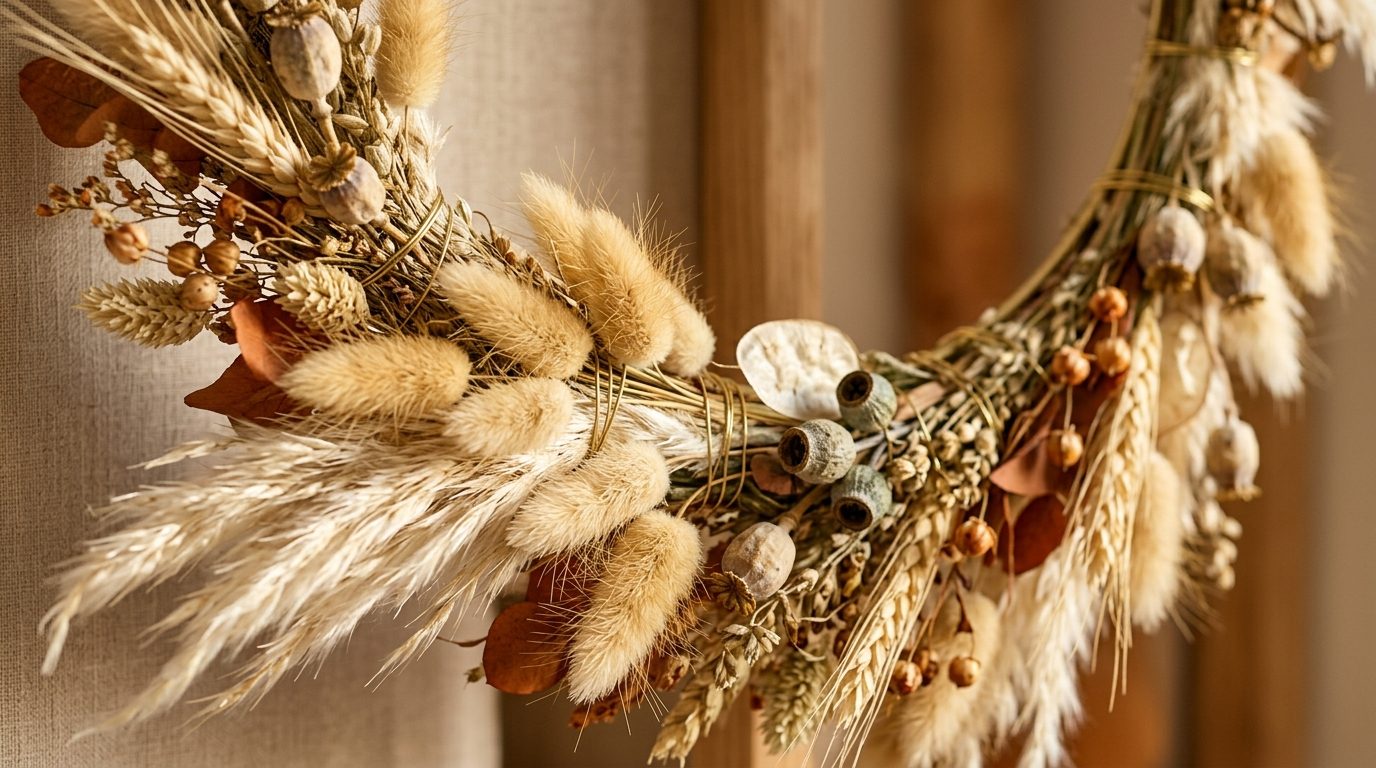
Just as our DIY faux terracotta pumpkin makeover transforms basic decor into high-end pottery, this floral project relies on intentional craftsmanship rather than store-bought bulk. An asymmetrical crescent design leaves the upper brass hoop exposed, allowing the negative space of your door or interior wall to breathe while highlighting the delicate featheriness of dried florals.
Why You’ll Love This DIY Autumn Wreath
- Everlasting Durability: Unlike fresh green wreaths that brown and drop needles within two weeks, preserved dried florals remain pristine through Thanksgiving and beyond.
- Custom Color Harmony: Tailor your botanical varieties to pair seamlessly with your modern rustic fall mantel styling or entryway palette.
- Cost-Effective Elegance: Artisan dried wreaths retail for $120 to $180 at high-end home boutiques; crafting your own costs under $35 in raw materials.
- Mindful, Tactile Process: Assembling mini-bouquets and wiring them onto a hoop is a therapeutic seasonal ritual that takes less than 45 minutes.
Tools, Supplies & Botanical Palette

To achieve an organic, high-end look, avoid symmetry. Choose a balanced variety of textural foundations, architectural spikes, and delicate fillers:
- Hoop Base: A 12-inch or 14-inch solid brass metal macramé ring (3mm thickness provides optimal rigidity without bending under tension).
- Foundation Foliage: Preserved spiral eucalyptus or silver dollar eucalyptus (remains pliable and provides a sage-green backdrop).
- Architectural Plumes: Dried mini pampas grass plumes and bleached natural bunny tails (Lagurus ovatus) for featherweight motion.
- Seed Pods & Starters: Dried poppy seed pods, scabiosa stellata pods, or nigella pods for sculptural dimension and depth.
- Binding Wire: 22-gauge or 24-gauge green or brass florist paddle wire. Avoid hot glue guns, which become brittle in cold air drafts.
- Finishing Ribbon: 2 yards of 1.5-inch frayed raw-edge silk or washed linen ribbon in olive, taupe, or deep rust.
Step-by-Step Assembly Walkthrough
1. Botanical Stem Trimming: Using sharp florist snips, trim all dried stems down to 4–6 inches in length. Remove any brittle lower foliage from the bottom 1.5 inches of each stem so the binding zone lies flush against the hoop.
2. Pre-Bundle Mini Posies: Before wiring directly to the hoop, create 7 to 9 small layered “posies” in your hand. Each posy should contain 1 sprig of eucalyptus at the back, 2–3 stems of wheat or pampas in the middle, and 2 bunny tails with 1 seed pod in the foreground.

4. Shingle the Posies: Place your first posy pointing upward along the hoop curve. Pull the paddle wire tightly over the stems three times with firm tension. Place the second posy directly below, overlapping the stem stems of the first bundle by 2 inches to conceal the wire. Continue around until you reach the 4 o’clock position, completing a dynamic two-thirds crescent.
5. Reverse Direction & Central Junction: Build a smaller 2-posy sequence moving upward from the opposite side to meet at the base. Conceal the central wire joint with an artful knot of frayed linen ribbon, allowing 18-inch tails to cascade downward.
3 Florist Secrets for Wreath Longevity
1. The Anti-Shedding Hair Spray Mist: Dried pampas grass and fluffy bunny tails shed fine fluff when disturbed by opening doors. Lightly mist the finished wreath from 12 inches away with a medium-hold aerosol hairspray. This invisible polymer coating locks every plume in place without altering color or texture.
2. Keep Continuous Wire Tension: Never rely on loose looping. Keep the wire paddle taut with your thumb as you rotate the hoop. If wire slack develops, dried stems will pivot out of alignment once hung vertically.
3. Avoid Direct Sunlight & High Humidity: Preserved eucalyptus and bleached grasses maintain their pristine appearance best when kept out of direct baking sunlight (which causes brittleness) and sheltered from driving rain if displayed on an exterior porch. Pair it with our weather-hardy fall container garden ideas for porch styling harmony.
The Finished Wreath Displayed

Hanging your wreath against an interior door, framed mirror, or in a cozy corner near your cozy fall reading nook creates an immediate seasonal anchor that feels curated and bespoke.
Botanical Durability & Sourcing Guide
| Botanical Element | Texture / Visual Role | Preservation Longevity | Sourcing Tip |
|---|---|---|---|
| Bunny Tails (Lagurus) | Soft velvet, warm cream to ochre | 2+ Years indoors | Look for naturally bleached or sun-dried bundles |
| Preserved Eucalyptus | Aromatic sage leaves, cascading drape | 18–24 Months | Select glycerin-preserved stems that bend without snapping |
| Poppy Seed Pods | Sculptural architecture, earthy gray | Indefinite (dry storage) | Forage from late summer gardens or craft florists |
| Mini Pampas Plumes | Feathery volume, airy movement | 2+ Years | Gently shake outside before crafting to release loose seeds |
Frequently Asked Questions
Can I hang a dried floral wreath on an exterior front door?
Yes, provided your front door is protected by a covered porch or storm door. Moisture and driving rain will soften preserved stems and cause mold, while direct midday UV sunlight can fade organic dyes. For fully exposed outdoor entryways, display the wreath indoors on a foyer wall or over a mantel instead.
How do I store this wreath after the holidays?
Store your dried floral wreath in a flat, rigid cardboard box lined with acid-free tissue paper. Place a silica gel packet inside to absorb ambient humidity, and store in a temperature-controlled closet rather than a damp basement or hot attic.
What is the best way to dust dried florals?
Use a handheld hairdryer on the absolute lowest speed and coolest temperature setting held 12 inches away, or use a soft photographic lens blower brush to gently whisk away household dust without snapping delicate seed pods.
Pin This DIY Fall Wreath Tutorial for Later
Planning your seasonal craft day? Save this step-by-step dried floral wreath tutorial to your DIY home decor or autumn crafts board on Pinterest so you have these floristry tips on hand when styling your home!
Leave a Comment