
Modern home crochet has moved far beyond stiff acrylic doilies and novelty granny squares. When approached with intentional natural fibers, disciplined gauge control, and clean geometric stitches, crochet produces durable, architectural textiles that elevate everyday living spaces—from dense absorbent kitchen dishcloths to structured wall-hanging baskets and corded table linens.
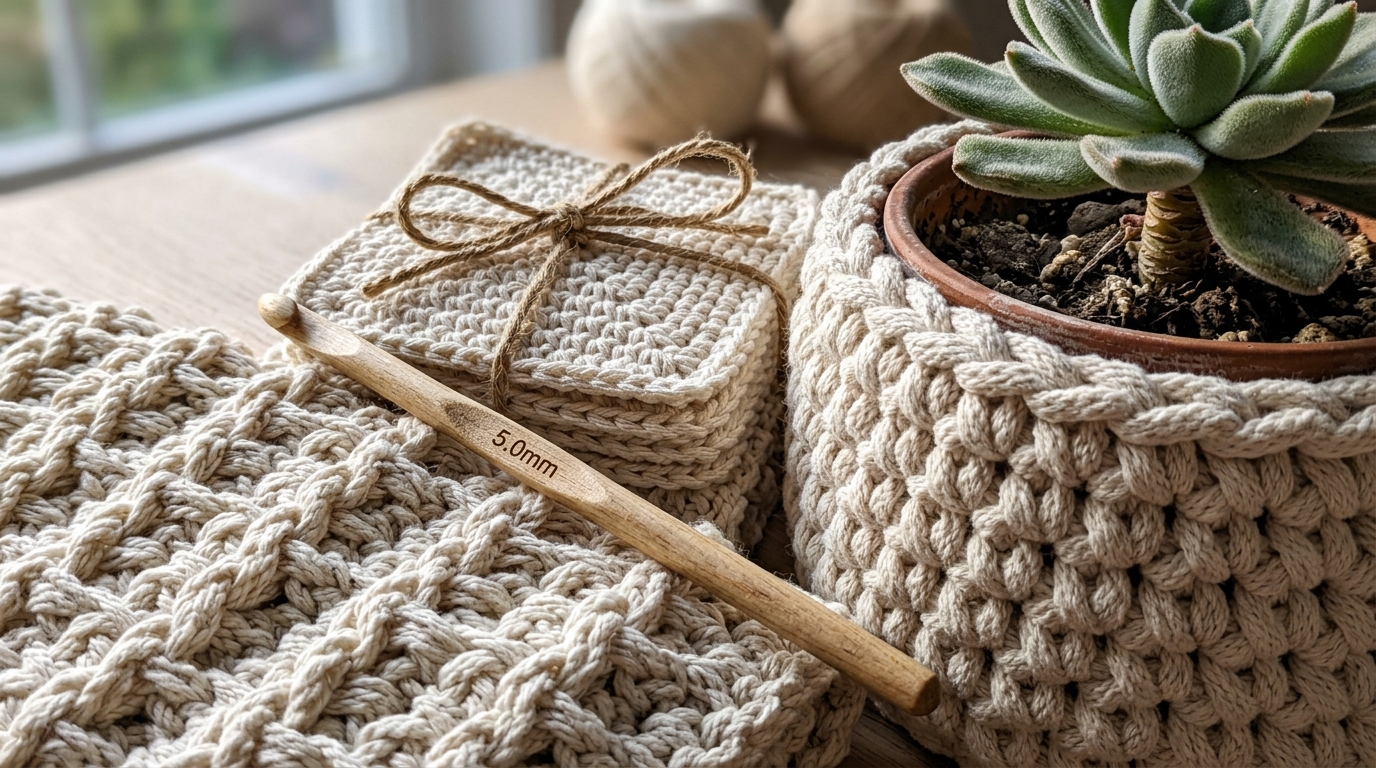
For beginners entering the craft, home decor projects offer the most forgiving, rewarding learning curve in fiber arts. Unlike garments that demand exacting body sizing or complex armhole shaping, home decor pieces are built on flat geometric planes, consistent row repeats, and functional stitch density. If you master four core stitches and respect fiber behavior, you can furnish every room in your home with handcrafted pieces that withstand daily friction and repeated machine washing.
Maker’s Project Blueprint: Home Crochet Foundation
- Skill Level: Complete Beginner to Intermediate Maker
- Core Fiber Standard: 100% Unmercerized Kitchen Cotton (#4 Worsted) & Bulky Cotton Cord
- Recommended Tool Kit: 4.0 mm (US G/6) and 5.0 mm (US H/8) birch wood or ergonomic hooks, blunt tapestry needle, brass tape measure
- Primary Project Hierarchy: 4 progressive learning tiers (Flat Squares → Table Linens → 3D Storage → Living Accents)
- Julian’s Studio Testing Note: “In our studio testing across dozens of home pieces, the single biggest differentiator between amateur-looking crochet and modern heirloom textiles is hook downsizing. Always select a hook 0.5 mm to 1.0 mm smaller than the yarn band suggests to eliminate loose gaps and establish structural fabric density.”
1. The 3 Golden Rules of Fiber Selection for Home Decor
In wearable crochet, softness and drape reign supreme. In functional home decor, however, fiber choice is dictated entirely by heat resistance, dimensional stability, and liquid absorption. Working with the wrong fiber will result in limp potholders that scorch or coasters that bead water instead of absorbing condensation.

- 100% Unmercerized Kitchen Cotton (The Kitchen Workhorse): Unlike mercerized cotton which is treated with sodium hydroxide for a silky sheen, unmercerized cotton retains its matte, open capillary structure. As detailed in our comprehensive guide to the best cotton yarns for crochet coasters, raw cotton absorbs up to 25 times its weight in liquid, making it non-negotiable for coasters, dishcloths, and washcloths.
- Bulky Cotton Cord & Macramé Tube Yarn (For 3D Architecture): When crafting standing baskets, floor bins, and hanging planters, standard worsted yarn collapses under its own weight. Braided 3 mm to 5 mm cotton cords create rigid vertical side walls without requiring starching or plastic inserts.
- Why Acrylic Fails on Tables and Countertops: Acrylic is petroleum-based synthetic plastic. When exposed to hot coffee carafes, teapots, or baking dishes, acrylic melts at 320°F (160°C). Furthermore, synthetic acrylic fibers repel water, causing glass condensation to slide off coaster surfaces directly onto wood furniture. Reserve acrylic strictly for decorative winter throws and keep it far away from food surfaces.
2. Essential Tools & The Downsizing Hook Secret
Crochet tool requirements for home decor differ noticeably from delicate lace or garment work. Home pieces require firm stitch tension and heavy friction, which can rapidly cause hand strain if using standard thin metal hooks.
- Ergonomic Birch Wood Hooks: Smooth birch or bamboo hooks provide a subtle natural grip against matte cotton yarn. While metal hooks can cause unmercerized cotton to split or slip too freely, wood regulates your pulling motion, resulting in uniform tension across long rows.
- The “Downsizing” Tension Rule: Yarn manufacturers typically recommend a 5.0 mm (US H/8) hook for #4 worsted cotton. For home decor, always step down to a 4.0 mm (US G/6) or 4.5 mm (US 7) hook. Downsizing compresses the yarn loops into a dense, opaque weave that conceals inner padding, prevents mug feet from tipping, and maintains structural integrity through repeated wash cycles.
- Blunt Large-Eye Tapestry Needles: Thick cotton fabric resists sharp embroidery needles. A blunt steel tapestry needle slides smoothly between dense stitch posts to weave in tails securely without piercing the cotton plies.
- Flexible Brass Tape Measure: Consistent dimensions are vital for sets. Checking your work against an accurate gauge guide ensures your coasters and placemats measure identical square dimensions. Consult our crochet coaster size guide for standard drinkware measurements.
3. Foundational Stitch Hierarchy: From Flat Mesh to Rigid Architecture
You do not need to memorize dozens of intricate stitches to create stunning home accents. Modern minimalist home design relies on clean texture and geometric clarity. Four fundamental stitch constructions form the backbone of modern functional crochet:

- Single Crochet (sc) — Maximum Density: The shortest standard stitch produces the tightest, most opaque fabric. Worked in back-and-forth rows or continuous spirals, single crochet creates sturdy walls for storage bins and dense cores for hot pads.
- The Thermal Stitch — Double-Thick Heat Shielding: By working single crochet into the back loop of the current row and the unworked front loop of the row below, you build a dense, honeycomb double-thick fabric. This is the gold standard for our double thick crochet potholder, insulating hands from high heat without requiring batting or fabric linings.
- The Crab Stitch (Reverse Single Crochet) — Structural Perimeter Lock: Working single crochet backward from left to right creates an interlocking, cord-like rope border. As demonstrated in our square crochet coasters with crab-stitch border, this technique adds lateral rigidity that permanently prevents square corners from curling upward.
- Waistcoat Stitch (Center Single Crochet) — Knit-Look Architecture: Inserting your hook directly between the two vertical legs of the single crochet post creates an upright V-pattern resembling stockinette knit. This stitch yields ultra-rigid vertical walls ideal for standing storage pots and plant cozies.
- Textured Ridges & Waffle Stitches: For drying towels and scrubbing cloths, combining front-post double crochet with standard stitches creates water-trapping ridges. Explore our master breakdown of the 8 best textured crochet stitches for home decor.
4. The 4-Stage Progressive Project Learning Roadmap
To avoid beginner overwhelm and develop muscle memory naturally, follow this curated four-stage project progression. Each tier builds directly upon the techniques mastered in the previous level:
Tier 1: Quick Flat Geometric Projects (Beginner Milestones)
Begin with small, low-commitment flat planes to calibrate your row-end stitch counts and tension control. These projects finish in under an hour and deliver immediate daily utility:
- Textured Kitchen Scrubbers: Work a simple 6-inch square using alternating single and double crochet stitches. Try our step-by-step modern textured dishcloth pattern for an easy weekend starter.
- Modern Circular Drink Coasters: Learn magic ring increases and seamless round joins with our foundational easy modern crochet coasters.
- Corded Square Coasters: Graduate to crisp right angles and reverse borders with our square crochet coasters pattern.
Tier 2: Table Linens & Functional Heat Protection
Once your edges remain straight and flat, scale up surface area to tackle larger table settings and heat-resistant kitchen tools:
- Farmhouse Kitchen Trivets: Combine heavy cotton with thick concentric rounds to safeguard countertops with our modern farmhouse trivet pattern.
- Double-Thick Thermal Hot Pads: Master dual-loop thermal stitching for heavy-duty oven protection using our tested thermal stitch potholder tutorial.
- Ribbed Farmhouse Placemats: Practice extended row consistency and clean border edging with our modern farmhouse placemats guide.
- Waffle-Weave Kitchen Towels: Build high-absorbency dish towels with our textured modern kitchen towel pattern.
Tier 3: 3D Functional Storage & Plant Accents
Transition from flat sheets into three-dimensional vessels. Learn continuous spiral bases, sharp 90-degree bottom transitions, and sturdy hanging loops:
- Modern Plant Hangers: Suspend trailing houseplants cleanly with our minimalist modern plant hanger pattern.
- Wall-Hanging Teardrop Baskets: Hook stylish vertical entryway storage for keys and mail with our modern hanging basket pattern.
- Chunky Stiff Storage Bins: Work bulky cord into rigid nursery and bookshelf organizers with our chunky round basket or our structured chunky square storage basket pattern.
Tier 4: Living Space Accents & Large Heirlooms
The ultimate expression of modern home crochet: large-format textile statement pieces for beds, sofas, and reading corners:
- Textured Geometric Pillow Covers: Replace commercial synthetic pillowcases with breathable, tactile covers via our modern textured pillow cover guide.
- Boho Dining Table Runners: Create elegant textured centerpieces with our modern boho table runner pattern.
- Chunky Throw Blankets: Cozy up modern seating areas with oversized stitches using our chunky crochet blanket for beginners.
5. Troubleshooting the 3 Most Common Beginner Pitfalls
When starting out, minor mechanical oversights can lead to frustrating shape deformities. Here is how to diagnose and correct them immediately:
- Why Are My Square Edges Trapezius-Shaped or Narrowing? Beginners frequently miss the final turning chain stitch or accidentally skip the very first stitch post adjacent to the hook. Count your stitches at the end of every row until the rhythm becomes second nature. Place a removable locking stitch marker into the first and last stitch of each row.
- Why Is My Flat Piece Curling or Ruffling? If edges curl inward like a bowl, your tension is too tight or your hook is too small. If edges ruffle and ripple like lasagna, you have worked too many increase stitches. For a full breakdown of physical causes and wet-blocking remedies, read our diagnostic guide on why crochet curls and 7 proven fixes.
- Why Are My Coasters Stiff Like Cardboard? Overly tight tension combined with thick cotton can produce an inflexible board-like textile. Relax your non-dominant hand’s grip, let the hook barrel determine loop height, and wash the finished item once to allow cotton plies to bloom and soften.
6. Styling Handmade Crochet in Modern Living Spaces
The secret to keeping handmade crochet fresh and modern—rather than dated—lies in disciplined palette restraint and thoughtful material contrast.

- Monochrome & Organic Earth Tones: Restrict your home palette to natural unbleached ecru, soft flax linen, slate charcoal, and muted warm olive. Neutral hues emphasize the sculptural texture of the stitches while blending harmoniously into modern Scandinavian or organic modern interiors.
- Pairing with Hard Surfaces: Position tactile crochet textiles against hard, reflective materials: pale oak wood, travertine stone, raw brass, and glazed speckled ceramic. The contrast between rough masonry or smooth timber and soft cotton weave provides rich interior depth.
- Hosting with Handcrafted Table Linens: When setting a relaxed table for friends, handmade placemats and coasters set an instantly welcoming tone. For complete entertaining timelines and table settings, pair your handmade pieces with Claire Montgomery’s casual weeknight dinner party hosting guide.
7. Laundering & Care: Keeping Cotton Textiles Crisp for Years
Unlike delicate acrylic or wool items that require finicky dry cleaning or hand soaking, 100% kitchen cotton home textiles thrive under everyday household laundering when handled correctly:
- Washing Machine Protocol: Place small items (coasters, dishcloths) inside a zippered mesh wash bag. Wash in cold or warm water on a gentle cycle using mild plant-based detergent. Avoid fabric softeners on kitchen cotton, as silicone coatings reduce the yarn’s natural moisture absorbency.
- Reshaping & Drying: Never tumble dry home crochet on high heat, which can shrink natural cotton unevenly and curl perimeter edges. Remove items damp from the wash, smooth edges flat on a clean dry towel, gently pull corners into 90-degree angles, and allow to air dry completely.
- The 10-Second Steam Press: For coasters, placemats, and trivets that experience heavy liquid contact, hover a steam iron 1 to 2 inches above the piece (never pressing directly onto the dry fiber). The moisture instantly relaxes fiber memory and resets edges into crisp, store-bought flatness.
Frequently Asked Questions
Is crochet or knitting better for home decor items?
Crochet is significantly better suited for functional home decor than knitting. Crochet’s individual knotted stitch architecture creates a substantially denser, more rigid fabric that maintains its shape without stretching out of proportion. While knitting excels at soft, stretchy apparel, crochet produces the structural stability required for baskets, coasters, and heavy trivets.
How long does it take for a complete beginner to learn modern crochet?
Most beginners master basic chain and single crochet stitches within two to three hours of focused practice. By starting with a simple flat dishcloth or square coaster, you can finish your first functional home decor item on your very first day.
Can I use acrylic yarn if I don’t plan to use the item with hot dishes?
While acrylic can be used for purely decorative wall hangings or sofa throws, cotton remains superior for virtually all tabletop items. Acrylic lacks the natural weight and drape of cotton, tends to pill with frequent friction, and accumulates static dust far more readily than natural plant fibers.
Pin This Modern Home Crochet Roadmap for Later
Ready to transform your living space with functional handmade textiles? Save this roadmap to your Pinterest crochet or DIY home decor board so you always have the fiber rules, stitch hierarchy, and pattern roadmap at your fingertips!
Leave a Comment