As cold November winds set in and household heating pulls moisture from indoor air, our hands bear the brunt of the season. Frequent kitchen washing, outdoor garden prep, and chilly dry drafts leave knuckles red, cuticles cracked, and fingertips raw. While standard pump lotions offer a quick splash of surface hydration, their high water content evaporates within minutes, often leaving compromised skin feeling just as tight as before. Making your own DIY calendula salve offers a much deeper, long-lasting remedy. By gently infusing golden dried marigold petals into cold-pressed plant oils and blending them with pure natural beeswax and raw shea butter, you create a rich botanical balm that locks in moisture and forms a protective, breathable shield over chapped winter skin.
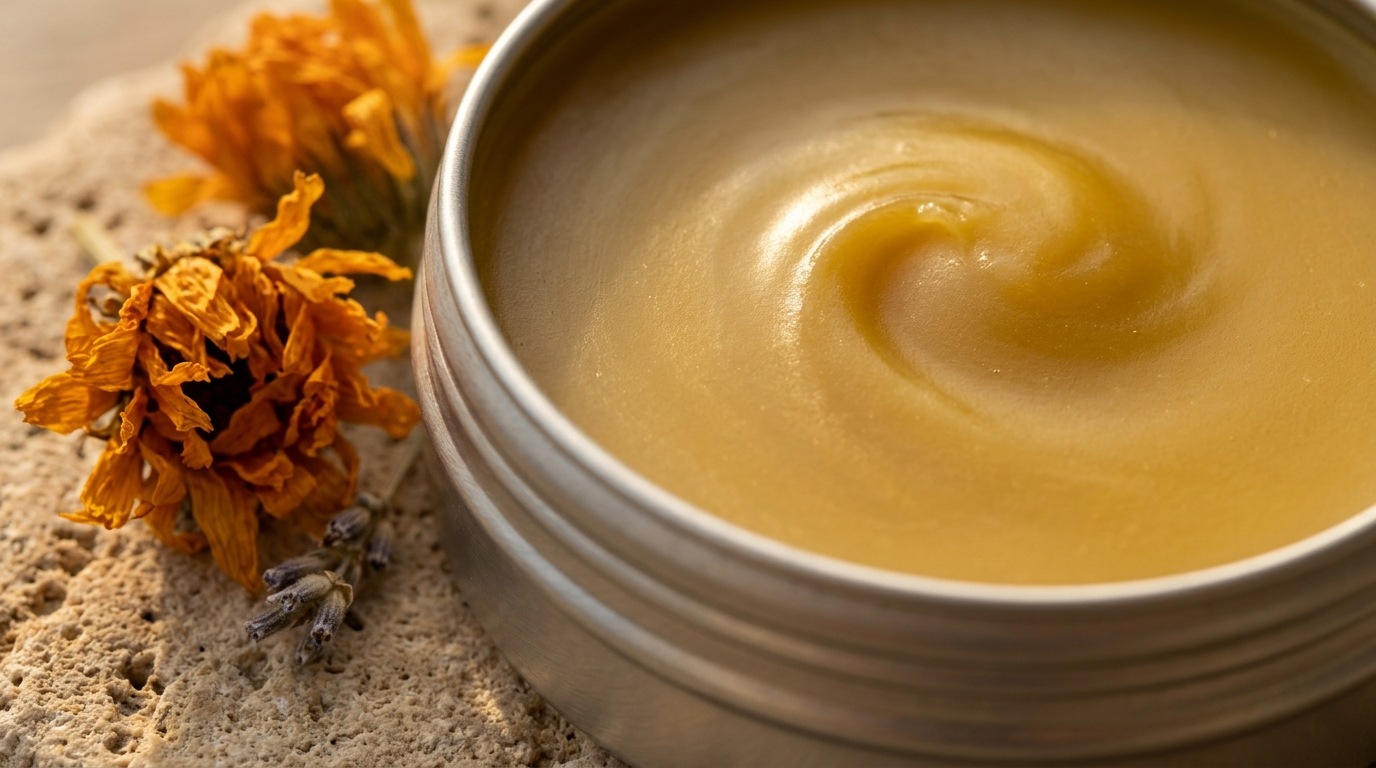
Herbal salves have been trusted home remedies for centuries precisely because they are anhydrous—meaning completely free of water. Without water, salves require no chemical emulsifiers, artificial stabilizers, or synthetic preservatives to remain fresh for over a year. A single dime-sized portion melts on contact with body heat, sinking into rough patches while leaving behind a velvety, water-resistant cushion. Whether you stash a small metal tin in your pocket for chilly outdoor walks or keep it on your nightstand for an overnight hand-repair ritual, this timeless domestic craft brings wholesome comfort to daily seasonal living.
The Magic of Calendula: How Golden Marigold Petals Condition Dry Winter Skin
Calendula (Calendula officinalis), commonly known as pot marigold, is widely considered the cornerstone herb of natural botanical skincare:
- Rich Carotenoids & Flavonoids: The brilliant orange and deep yellow hues of dried calendula petals come from high concentrations of plant carotenoids and antioxidant flavonoids. When steeped in oil, these fat-soluble compounds transfer directly into the lipid base, turning the oil a warm amber-gold and providing soothing relief to stressed skin.
- Gentle for Sensitive Skin: Unlike pungent herbs like peppermint or oregano, calendula is extraordinarily mild. It calms wind-burned cheeks, dry knuckles, and irritated winter patches without causing stinging or burning.
- Natural Cuticle & Knuckle Softener: The resinous compounds in calendula help soften stubborn calluses and hard skin around the nails, working seamlessly alongside our targeted diy cuticle oil recipe.
- Completely Edible & Food-Safe: Because calendula is a culinary herb, this balm is safe to use on chapped lips and dry fingertips without worry, sharing the clean simplicity of our classic diy beeswax lip balm recipe.
Quick Stovetop Warm Infusion vs 4-Week Solar Steeping
To capture the botanical virtues of dried calendula blossoms, you must first infuse them into a carrier oil. You can choose between two reliable extraction methods:

- The Quick Warm-Water Method (Ready in 2 Hours): Place 1 cup of dried calendula flowers into a clean glass mason jar and pour 1 cup of extra virgin olive oil or golden jojoba oil over top until petals are fully submerged. Set the jar inside a small saucepan filled with 2 inches of water over low heat. Let the water gently warm (never simmer or boil) for 2 hours, stirring occasionally. Strain through cheesecloth or a fine mesh sieve.
- The Traditional Solar Method (Slow & Patient): Pack a clean jar half-full with dried flowers, cover completely with carrier oil, seal with an airtight lid, and place on a sunny windowsill for 4 to 6 weeks. Shake the jar every few days. Strain thoroughly when the oil turns rich amber.
- Best Carrier Oils: Extra virgin olive oil is the traditional choice because of its heavy conditioning squalene content. If you prefer a lighter, faster-absorbing finish, golden jojoba oil or sweet almond oil (from our diy body oil recipe) works beautifully.
The Ideal 4:1 Oil-to-Wax Ratio for a Silky, Melt-on-Contact Texture
The texture of an herbal salve is all about the balance between fluid carrier oils and solid beeswax. Too much wax turns the salve as hard as a candle; too little leaves it runny and greasy. We recommend this tested ratio for standard 2-ounce tins:
| Ingredient | Quantity | Role in Formula |
|---|---|---|
| Calendula-Infused Olive Oil | 1/2 cup (4 fl oz) | Carries soothing botanical phytonutrients and provides deep lipid nourishment. |
| Yellow Beeswax Pastilles | 2 level tablespoons (approx. 0.6 oz) | Creates a firm balm structure and leaves a breathable, water-resistant protective layer. |
| Raw Unrefined Shea Butter | 1 tablespoon | Adds a creamy velvet glide, similar to our solid diy lotion bars recipe. |
| Pure Vitamin E Oil | 4 drops | Natural antioxidant that keeps plant lipids fresh and extends shelf life. |
| French Lavender Essential Oil (Optional) | 8 to 10 drops | Adds a gentle calming aroma for evening wind-downs; can be omitted for unscented balm. |
Step-by-Step Gentle Melting, Straining & Pouring Walkthrough
Making herbal salve takes about 10 minutes from start to finish. Follow this simple process for a perfectly smooth, silky surface without cracks:

- Set Up Your Double Boiler: Place a heatproof glass measuring cup or small stainless steel pitcher inside a pot containing 1 to 2 inches of water over medium-low heat.
- Melt the Beeswax into Infused Oil: Pour 1/2 cup of strained calendula oil and 2 tablespoons of beeswax pastilles into the measuring cup. Stir occasionally with a wooden skewer or spoon until the wax is completely melted into the golden oil (about 5 minutes).
- Stir in Shea Butter: Turn off the heat and add 1 tablespoon of raw shea butter. Shea butter is sensitive to high heat, so letting it melt in the residual warmth prevents it from turning grainy as it cools.
- Perform the Quick Spoon Test: Dip a metal teaspoon into the liquid mixture and place it in your freezer for 60 seconds. Touch the cooled salve on the spoon—if it feels too firm, add a splash more infused oil; if too soft, stir in a pinch more beeswax.
- Add Vitamin E and Pour: Stir in 4 drops of Vitamin E oil and your essential oils. Slowly pour the warm liquid into clean, dry 2-ounce aluminum tins or amber glass jars.
- Cool Undisturbed: Leave the open tins completely untouched at room temperature for 30 to 45 minutes until firm and opaque. Moving or jostling cooling tins creates unsightly cracks or center craters. Once solid, press on the lids.
4 Daily Self-Care Uses: From Gardener’s Hands to Cuticle Recovery
Because calendula salve is rich and concentrated, a small tin goes a very long way. Here are four practical ways to integrate it into your daily seasonal routines:

- Overnight Intensive Hand Treatment: Before heading to bed as part of your quiet fall night routine habits, massage a generous pea-sized amount over knuckles and nail beds. Slip on a pair of soft breathable cotton gloves to let the beeswax and plant lipids deeply soften skin while you sleep.
- Gardener’s & Maker’s Barrier Balm: If you work with clay, soil, fiber arts, or frequent domestic cleaning, rub a thin layer into palms before starting. The beeswax forms a subtle barrier that prevents dirt and cold air from drying out natural skin oils.
- Rough Elbow & Heel Resets: After stepping out of the shower, smooth a small amount over heels and elbows to seal in moisture, pairing beautifully with our roll-on diy perfume oil on pulse points.
- Winter Wind Barrier: Dab a tiny touch onto the bridge of your nose and cheekbones before chilly outdoor autumn walks or winter hikes to protect sensitive skin against biting breezes.
Shelf Life, Storage Guidelines & The Zero-Water Stability Advantage
Because this salve contains zero water, microbial growth is naturally prevented without artificial preservatives. To keep your batches in peak condition, observe these simple storage habits:
- Room Temperature Longevity: Stored in a cool, dry pantry or bedroom vanity away from direct heat and direct sunlight, calendula salve remains fresh and effective for 12 to 18 months.
- Avoid High Heat: Natural beeswax melts around 144°F (62°C). Do not leave your salve tins in hot car glove compartments or near heating radiators, which can cause the balm to liquefy and re-solidify unevenly.
- Clean Dry Fingers: Always apply salve with clean, dry hands. Introducing droplets of water into the tin can compromise its long-term stability.
Common Questions from First-Time Salve Crafters
Can I use fresh calendula flowers from my garden?
We strongly recommend using 100% dried petals. Fresh flowers hold high amounts of moisture inside their cell walls. If steeped in oil, this water separates and can cause mold to develop in your infused oil within days. If harvesting fresh, spread the blossoms on a screen in a dry room for 7 to 10 days until crisp before infusing.
How can I make this salve vegan?
You can substitute candelilla wax for the beeswax. Because candelilla wax is significantly harder and has a higher melting point than beeswax, reduce the wax amount by roughly half: use 1 level tablespoon of candelilla wax per 1/2 cup of infused oil.
Can I add other herbs like chamomile or plantain?
Absolutely! Calendula pairs wonderfully with dried German chamomile flowers, dried plantain leaf, or dried lavender buds. Simply mix equal parts of the dried herbs together and follow the same oil infusion process.
Save This DIY Calendula Salve Recipe to Pinterest
Love this comforting botanical herbal salve? Save this pin to your natural remedies, DIY skincare, or homesteading board on Pinterest so you always have the tested 4:1 oil-to-wax ratio ready whenever dry winter skin needs gentle relief!
Started testing this gentle routine earlier this week and it’s already helping me wind down so much faster in the evenings. Such simple, realistic steps that don’t feel overwhelming at all.
Hi Maya! How do you maintain these gentle habits on hectic days when you only have 5 or 10 minutes?
I love the ‘one small anchor’ rule! On super busy days, don’t try to complete the full ritual—just light one natural candle or brew one mindful cup of tea without your phone. That tiny moment of stillness signals calm to your nervous system. Take it gently!