
There is something deeply grounding about drawing a warm evening bath when the weather turns crisp, especially when the rising steam carries the gentle scent of dried botanicals and pure essential oils. Making your own botanical bath salts at home is one of the simplest, most satisfying self-care rituals you can create. With a wholesome base of mineral Epsom salt, coarse sea salt, and a splash of nourishing plant oil, you can tailor each jar to suit your mood—whether you want a quiet, calming lavender soak before bed or a refreshing citrus-eucalyptus blend after a long, chilly day.
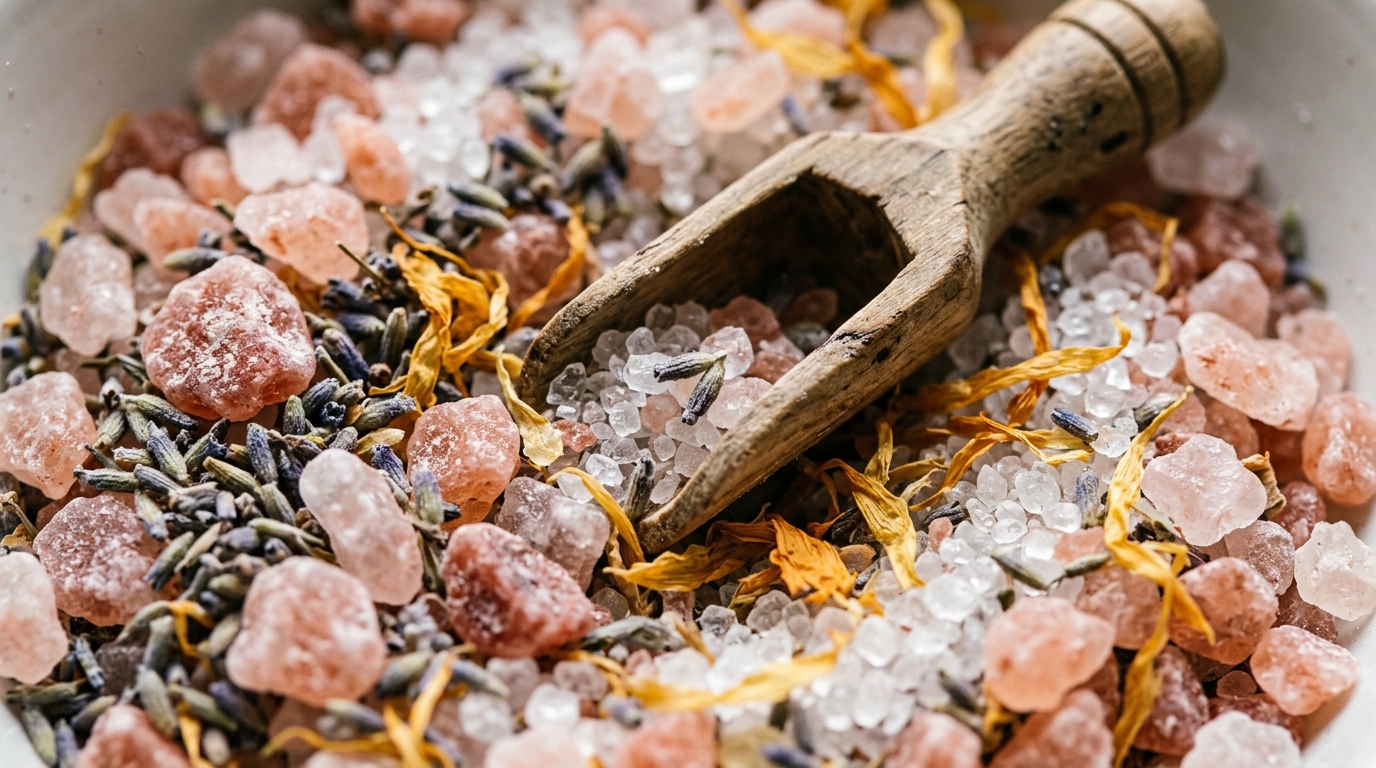
Unlike commercial bath products that frequently rely on artificial colorants, synthetic preservatives, and heavy lab-made perfumes, homemade bath salts let you control every single ingredient that enters your water. A thoughtful combination of varied salt crystal sizes not only looks beautiful displayed in clear glass apothecary jars on your bathroom shelf, but also ensures that the minerals dissolve at a steady, gradual rate throughout your soak. Here is how to balance the mineral base, blend safe aromatic oils, and master three tested botanical bath soak recipes for your evening routine.
The Mineral Foundation: Why Mixing Epsom and Coarse Sea Salt Works Best
The foundation of any good homemade bath soak is a balanced mineral blend. While you can make bath salts using Epsom salt alone, combining different salt varieties creates a superior texture, varied grain sizes, and a far more luxurious water feel:
- Epsom Salt (Magnesium Sulfate): The essential core of homemade bath soaks. Epsom salt crystals dissolve quickly in warm water, softening the bathwater and creating a silky feel without leaving gritty residue on the bottom of the tub.
- Coarse Sea Salt or Pink Himalayan Salt: Adding coarse sea salt or unrefined pink rock salt introduces varied crystal structures and subtle natural trace minerals. Because these larger granules take longer to melt, they steady the release of aromatic oils and keep the water lightly fragrant from start to finish.
- Baking Soda (Sodium Bicarbonate): A gentle pantry staple that softens hard tap water and leaves skin feeling smooth and comforted without stripping natural moisture.

Carrier Oils & Safe Essential Oil Dilution Ratios for Bathwater
One of the most important rules in bath crafting is understanding how essential oils behave in warm water. Because oil and water do not mix, dropping pure essential oils directly into a running bath causes undiluted droplets to pool on the surface, where they can touch sensitive skin and cause irritation.
To keep your bath soak gentle, safe, and pleasant, always adhere to these two basic formulation guidelines:
- Pre-Dilute in a Nourishing Carrier Oil: Always mix your essential oils into a tablespoon of liquid plant oil—such as sweet almond oil, jojoba oil, or fractionated coconut oil—before tossing them with the dry salts. The carrier oil serves as a gentle buffer, coating the individual salt grains and helping the scent disperse uniformly across the water.
- Stick to a 1% Dilution Ratio: For a full bathtub soak, aim for 15 to 20 drops of pure essential oil per 3 cups of dry salts. This provides a warm, comforting room aroma without overpowering your senses. If crafting for sensitive skin, keep the total to 10 to 12 drops.

3 Tested Botanical Bath Salt Blends (Lavender, Citrus, Eucalyptus)
Each of these tested formulas makes approximately 3 cups of bath salts (enough for 3 to 4 generous baths). Mix in a wide glass or ceramic bowl before packaging into airtight glass jars:
Calming French Lavender & Chamomile Soak
A classic, serene blend designed for quiet evenings. Best paired with our calming evening routine rituals.
- Mineral Base: 2 cups coarse Epsom salt + 1 cup coarse pink Himalayan salt + 1/4 cup baking soda
- Carrier Oil: 1 tablespoon sweet almond oil
- Aromatics: 12 drops French lavender oil + 6 drops Roman chamomile oil
- Botanicals: 2 tablespoons dried whole lavender buds + 1 tablespoon dried whole chamomile flowers
Sweet Orange, Cedarwood & Calendula Soak
Bright, comforting, and warm with golden petals. Complements a mindful Sunday reset routine.
- Mineral Base: 2 cups coarse Epsom salt + 1 cup coarse sea salt + 1/4 cup baking soda
- Carrier Oil: 1 tablespoon jojoba oil
- Aromatics: 12 drops sweet orange oil + 6 drops Atlas cedarwood oil
- Botanicals: 2 tablespoons dried golden calendula petals
Eucalyptus & Peppermint Steam Soak
Clean and invigorating after spending time in brisk outdoor autumn air. Pairs well with our eucalyptus shower bundle guide or DIY shower steamers.
- Mineral Base: 2.5 cups coarse Epsom salt + 1/2 cup coarse sea salt + 2 tablespoons baking soda
- Carrier Oil: 1 tablespoon fractionated coconut oil
- Aromatics: 10 drops eucalyptus globulus oil + 5 drops peppermint oil
- Botanicals: 2 tablespoons coarsely crushed dried eucalyptus leaves
Step-by-Step Mixing & Moisture-Free Storage Walkthrough
Making bath salts takes less than 10 minutes from start to finish. Follow these four simple phases to ensure a smooth, long-lasting batch:
1. Combine Dry Minerals: In a large, dry ceramic or glass mixing bowl, measure the Epsom salt, coarse sea salt (or Himalayan salt), and baking soda. Whisk gently with a fork to break up any small lumps in the baking soda.
2. Whisk Scented Carrier Oil: In a small glass ramekin, measure your carrier oil. Add your drops of pure essential oils directly into the carrier oil and stir with a toothpick or small spoon for 10 seconds to thoroughly blend the aromatics.
3. Rub Oil into the Salts: Drizzle the oil blend over the dry salt crystals. Using a wooden spoon or clean, dry hands, thoroughly toss and fold the salt until the oil is evenly distributed. The mixture should feel slightly damp and glistening, with no dry pockets and no greasy puddles.
4. Fold Botanicals & Jar Immediately: Add your dried flowers or crushed leaves last. Stir gently so the petals do not shatter into powder. Transfer immediately into a clean, airtight glass jar with a rubber seal or cork stopper to keep room humidity out.

How to Draw an Herbal Bath Without Clogging the Drain
Floating botanical petals look undeniably romantic in photos, but fishing soggy lavender buds out of your bathtub drain after a relaxing bath is far from restful. Here is how to enjoy dried flowers without any post-bath cleanup:
- Use a Muslin Tea Bag: Scoop 3/4 cup of your botanical bath salts into a reusable cotton muslin tea bag or drawstring linen pouch. Hang the pouch directly under the running hot tap as the tub fills. The salts dissolve completely, the carrier oil and scent infuse into the warm water, and all the petals stay neatly contained.
- Add Salts Mid-Fill: Pour your salts into the tub when it is about half full. Agitate the water with your hand to help the crystals dissolve thoroughly before you step in.
- Optimal Water Temperature: Keep your bath water pleasantly warm rather than scorching hot. Hot water causes essential oils to vaporize too quickly, while comfortable warm water allows the soothing scent to linger around the tub for 20 to 30 minutes. Consider integrating this into a restful Sunday night unwind routine.
Troubleshooting Clumping, Scent Fade & Moisture Creep
Why did my bath salts harden into a solid block?
Salts are naturally hygroscopic, meaning they pull moisture directly out of humid bathroom air. If your jar was opened during a steamy shower or sealed loosely, the crystals will bind together. To fix this, seal the jar tightly and store it in a dry linen closet or bedroom cabinet instead of right next to the shower. Adding 1 teaspoon of arrowroot starch or kaolin clay to the dry mix also helps absorb stray moisture.
How long do homemade bath salts stay fresh?
Stored in an airtight glass jar away from direct sunlight, homemade bath salts maintain their full scent and texture for 6 to 9 months. Over time, volatile citrus top notes may soften, but the mineral benefits remain unchanged.
Can I add food coloring or cosmetic mica?
We recommend keeping bath salts natural without synthetic dyes. Liquid food colorings add water, which causes the salts to dissolve and clump prematurely. If you want a soft pop of color, rely on pink Himalayan rock salt or a pinch of cosmetic-grade French green clay or yellow French clay.
Save This Homemade Bath Salt Recipe to Pinterest
Easy DIY Bath Salts Recipe for Calm Evenings
Save this natural bath salts recipe to your Pinterest self-care or natural living board. Learn how to mix Epsom salt, coarse sea salt, and pure essential oils for three relaxing bath blends.
Leave a Comment