
Living in an urban apartment, north-facing home, or possessing interior hallways with zero direct window exposure often leads homeowners to believe that lush indoor houseplants are an impossible luxury. Yet in the natural world, tropical understory species thrive for centuries beneath dense jungle canopies receiving little more than filtered twilight. By selecting well documented low-light botanical varieties—and mastering the critical watering adjustments required when photosynthesis slows—you can transform dim room corners into thriving, sculptural emerald sanctuaries.
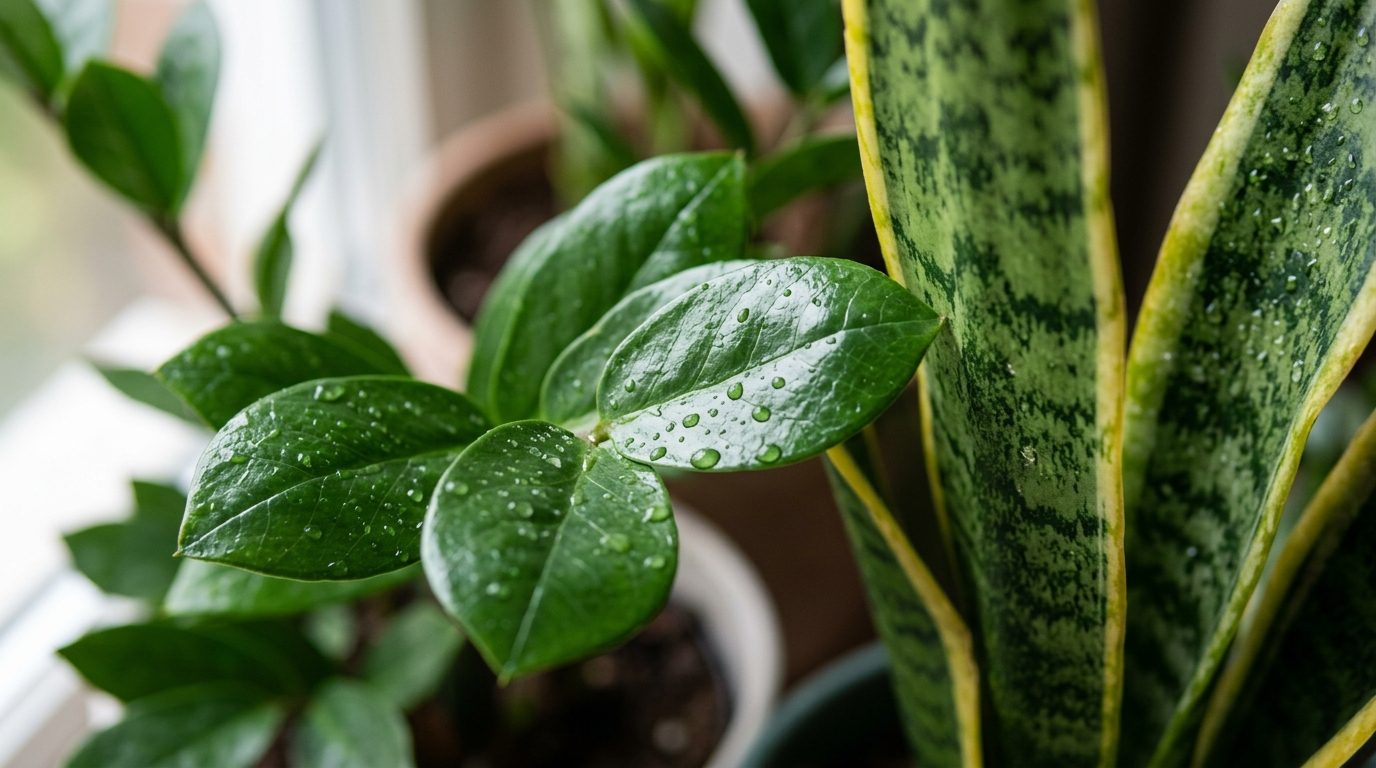
While our guide to windowsill herb gardening focused on high-light culinary greens that require 6+ hours of direct sun, low-light indoor plants operate on the opposite spectrum. Tucked into cozy corners of your small living room layout or framing your warm minimalist bedroom sanctuary, these architectural plants provide grounding biophilic beauty without demanding constant window light.
Why You’ll Love Low-Light Houseplants
- Virtually Indestructible Resilience: Built to endure neglected watering cycles, fluorescent office lighting, and windowless bathrooms with ease.
- Natural Air Purification: Varieties like Snake Plants and Golden Pothos continuously absorb indoor formaldehyde, benzene, and xylene from synthetic furnishings.
- Deep Saturated Greenery: Because low-light plants produce extra chlorophyll to maximize dim light absorption, their leaves develop a dramatic, moody emerald saturation.
- Minimal Seasonal Demands: Unlike finicky blooming plants, these architectural species maintain consistent structural form year-round without seasonal leaf drop.
Essential Low-Light Care Kit & Diagnostic Tools

In low-light spaces, water evaporates up to three times slower than on sunny windowsills. Having reliable diagnostic tools prevents the fatal trap of root rot:
- Digital Moisture Probe: Never guess soil moisture by looking at the surface crust. A 7-inch moisture meter probe measures root-zone hydration accurately at the pot’s core.
- Porous Terracotta Vessels: Unglazed terracotta planters, such as those seasoned in our DIY aged moss terracotta tutorial, allow air exchange through clay walls, helping soggy soil dry evenly.
- Coarse Aerated Soil Blend: Mix 50% indoor potting soil with 30% chunky orchid bark and 20% coarse perlite. Never use heavy, water-retaining garden loam.
- Microfiber Dusting Cloth: Dust particles settling on leaves act as optical filters, blocking the limited ambient photons the plant desperately needs.
The Top 5 Unkillable Low-Light Varieties
1. ZZ Plant (Zamioculcas zamiifolia): The undisputed king of dim interiors. The ZZ plant features potato-like underground rhizomes that store water reserves for up to two months. Its thick, mirror-shiny leaves thrive in interior rooms 15 feet away from the nearest window.
2. Snake Plant / Mother-in-Law’s Tongue (Sansevieria / Dracaena trifasciata): Famous for its upright, sword-like sculptural leaves with variegated yellow borders. Snake plants operate on Crassulacean Acid Metabolism (CAM), absorbing carbon dioxide and releasing fresh oxygen during nighttime hours, making them the ultimate bedroom companion.

3. Cast Iron Plant (Aspidistra elatior): Earned its Victorian name because it is practically impossible to kill. Native to shaded Japanese forest floors, it tolerates extreme shade, dry indoor radiator air, and cold winter drafts without browning.
4. Golden Pothos (Epipremnum aureum): The most adaptable trailing vine in the world. Displays heart-shaped leaves that cascade effortlessly from floating shelves. While intense variegation softens in deep shade, the vine continues producing lush foliage under simple fluorescent room lighting.
5. Chinese Evergreen (Aglaonema): Unlike most shade plants that only offer solid green leaves, Aglaonema varieties feature striking splashes of silver, cream, and muted rose that remain vibrant even in windowless bathrooms and dark entry foyers.
3 Horticultural Secrets for Dim Rooms
1. Cut Watering Frequency by Half: The primary killer of low-light plants is not darkness—it is overwatering. Because photosynthesis slows drastically in dim light, root systems consume water at a fraction of the rate of sunlit plants. Always wait until the soil is 80% to 100% dry before watering.
2. Perform the Monthly Leaf Wipe Ritual: In low-light environments, every single lumen counts. A layer of microscopic household dust acts like tinted sunglasses on leaves. Gently wipe both sides of every leaf monthly with a damp cloth moistened with rain water or diluted neem oil.
3. The “Light Vacation” Rotation: If you keep a ZZ plant or Snake plant in a windowless hallway or bathroom, rotate it once every two months to a room with bright indirect window light for 7 days. This periodic “sunlight vacation” recharges its carbohydrate reserves without causing shock.
The Finished Botanical Corner Styled at Home

Positioned near your DIY fluted coffee table or accenting an entryway console, these resilient botanical companions infuse sculptural life and tranquil oxygen into every corner of the home.
Low-Light Plant Diagnostic Matrix
| Houseplant Variety | Minimum Foot-Candles | Watering Schedule | Drought Tolerance |
|---|---|---|---|
| ZZ Plant (Zamioculcas) | 25 – 75 fc (Very Low) | Once every 3–4 Weeks | Extreme (survives 60+ days without water) |
| Snake Plant (Sansevieria) | 50 – 100 fc (Low) | Once every 3 Weeks | Extreme (thick succulent leaves) |
| Cast Iron Plant (Aspidistra) | 50 – 150 fc (Low) | Once every 2 Weeks | High (tolerates dust and dry indoor air) |
| Golden Pothos (Epipremnum) | 75 – 200 fc (Medium-Low) | Once every 10–14 Days | Moderate (leaves droop slightly when thirsty) |
| Aglaonema (Chinese Evergreen) | 75 – 150 fc (Low) | Once every 12–16 Days | High (adapts readily to fluorescent lighting) |
Frequently Asked Questions
Can a plant survive in a room with zero windows?
No plant can survive in pitch-black 24/7 darkness without any light source whatsoever. However, ZZ plants, Snake plants, and Pothos can thrive indefinitely in windowless rooms (such as offices or interior bathrooms) if standard fluorescent or LED ceiling lights remain turned on for 8 to 10 hours during the day.
Why are the stems of my low-light plant stretching out and looking thin?
When a plant produces long, spindly stems with sparse leaves (“etiolation”), it is signaling that light levels have dropped below its minimum survival threshold. Move the plant 3 to 5 feet closer to a window, or add an unobtrusive 10W warm-white LED grow bulb in an adjacent lamp.
Do low-light indoor plants need fertilizer during the winter?
No. Because plants in dim environments grow at a relaxed, slow pace, they require very few soil nutrients. Fertilizing a dormant low-light plant causes mineral salts to build up in the soil, burning the roots. Feed with diluted organic fertilizer only once or twice during late spring and summer.
Pin This Low-Light Houseplant Guide for Later
Have a dark corner or north-facing room in need of green life? Save this low-light indoor houseplant guide to your indoor gardening or plant care boards on Pinterest so you always have these watering formulas and variety selections at your fingertips!
Appreciate the practical lighting tips here! I was accidentally placing my cuttings in direct scorching afternoon sun before reading this. Moved them to bright indirect light and they look so much happier.
Indirect light is definitely the sweet spot—it keeps the water temperature steady so those fragile root hairs don’t rot. Glad your cuttings are thriving now!