
Keeping wooden dining tables, bookshelves, and coffee tables free from dust can feel like an endless chore, particularly during autumn when heating vents start circulating dry indoor air. Many commercial aerosol dusting polishes promise an instant high-gloss shine, but over time they leave a stubborn, gummy silicone film that actually attracts more dust particles and dulls the natural grain. Crafting your own DIY dusting spray takes only two minutes using common pantry staples: distilled water, white vinegar, a dash of conditioning plant oil, and fresh botanical essential oils.
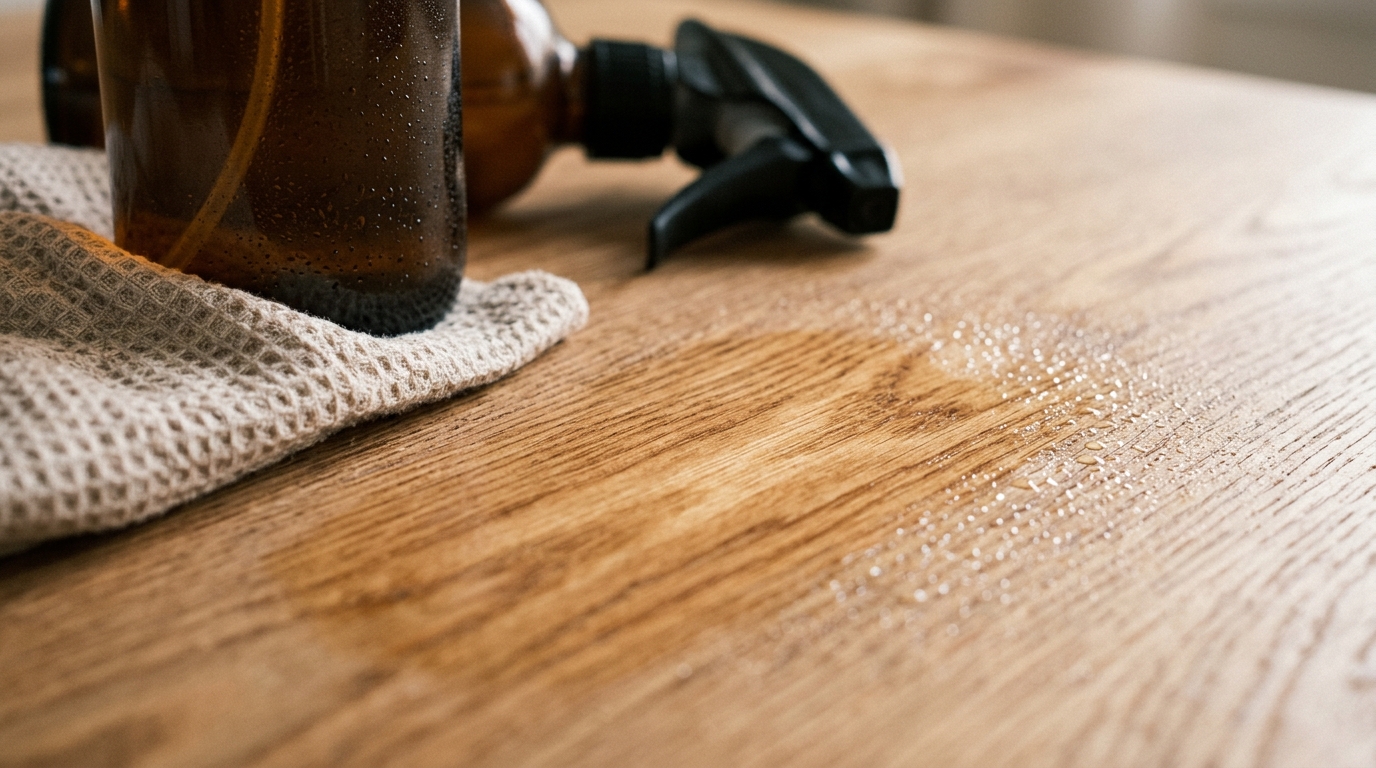
Unlike store-bought sprays that rely on synthetic petroleum propellants and artificial perfumes, this homemade formula cleans and conditions simultaneously. The mild acidity of distilled vinegar cuts through fingerprint smudges and grease, while a measured touch of olive or fractionated coconut oil nourishes dry wood grain without leaving an oily surface. Here is our tested, reliable recipe for everyday dusting across sealed wood, painted trim, and laminate furniture.
Why Commercial Aerosol Sprays Leave Sticky Residue on Wood
Most aerosol furniture polishes contain silicone fluids and synthetic waxes designed to produce an immediate artificial shine. However, these ingredients cause practical issues over time:
- The Silicone Dust Magnet: Silicone does not evaporate or soak into sealed wood. Instead, it forms an invisible sticky layer on tabletops. When airborne dust settles on this layer, it becomes trapped, making surfaces look grimy within 24 to 48 hours.
- Uneven Waxy Buildup: Repeated applications create cloudy smudges on dark walnut or mahogany that are difficult to buff away without harsh chemical strippers.
- Clean Evaporation with Natural Ingredients: A homemade vinegar-and-water solution lifts surface grime and evaporates cleanly, leaving only microscopic traces of conditioning plant oil deep within the wood pores. Check our autumn entryway reset habits for keeping entry console tables clean and organized.
The 4-Part Formula: Carrier Oil, Vinegar, Castile Soap & Water
A balanced dusting spray requires four key components working in harmony. Each ingredient plays a specific functional role:

- Distilled Water (1 Cup): Forms the bulk of the solution. Using distilled water rather than tap water prevents hard water spots and prevents bacterial growth, keeping your spray fresh for months.
- White Distilled Vinegar (1/4 Cup): The natural cleaning workhorse. Vinegar cuts through greasy fingerprint marks, dissolves light grime, and helps dissipate static electricity that attracts dust to electronic consoles and desks.
- Extra Virgin Olive Oil or Fractionated Coconut Oil (2 Tablespoons): Nourishes and conditions the wood. Fractionated coconut oil is especially light and stays liquid at room temperature, while olive oil provides a warm, rich luster to older wooden pieces.
- Liquid Castile Soap (1/2 Teaspoon): The essential emulsifier. Because oil and water naturally separate, a few drops of unscented liquid castile soap help bind the oil into the water when shaken, ensuring every spray delivers a balanced mist. Compare this with our natural formulas in the diy fall room spray guide.
Essential Oil Blends for Natural Wood Care (Cedarwood & Sweet Orange)
Adding pure botanical essential oils gives your dusting spray a crisp, pleasant aroma while providing natural cleansing properties. We recommend two tested scent combinations for autumn cleaning:
Blend 1: Classic Cedar & Sweet Orange Polish
The quintessential wood-furniture aroma. Cedarwood highlights the natural scent of oak and pine, while sweet orange cuts through stale indoor air.
- 12 drops sweet orange essential oil
- 8 drops atlas cedarwood essential oil
- 4 drops clove bud or cinnamon leaf oil (optional warm spice note)
Blend 2: Crisp Lemon & Rosemary Refresh
Bright, clean, and herbal. Excellent for kitchen islands, open shelving, and dining tables where you want a fresh, clean atmosphere.
- 14 drops cold-pressed lemon essential oil
- 6 drops rosemary essential oil
- 4 drops tea tree or eucalyptus radiata oil
Step-by-Step Mixing & Spray Bottle Assembly Walkthrough
Assembling your dusting spray takes less than two minutes. Follow these simple steps for best results:

1. Prepare an Amber Glass Bottle: Use a clean 16-ounce glass spray bottle with an adjustable trigger nozzle. Amber or cobalt glass protects the essential oils from UV degradation and prevents potential chemical leaching from plastics.
2. Measure the Liquids: Place a small funnel into the bottle neck. Pour in 1 cup of distilled water, followed by 1/4 cup of white distilled vinegar, 2 tablespoons of olive or fractionated coconut oil, and 1/2 teaspoon of liquid castile soap.
3. Add Botanical Essential Oils: Drop in your chosen essential oil combination (20 to 24 drops total). Secure the trigger sprayer tightly.
4. Shake Before Every Use: Because this recipe uses no synthetic stabilizers, the oil droplets will slowly rise to the top over time. Give the bottle a vigorous 5-second shake immediately before spraying to ensure an even emulsion.
How to Dust Wood Surfaces Properly (The Microfiber Method)
Technique matters just as much as the cleaning solution you use. Follow these practical dusting habits to protect wood finishes:

- Spray the Cloth, Not the Wood: Never spray liquid directly onto fine wooden furniture. Direct spraying can cause droplets to seep into wood seams, joints, or veneer edges, leading to swelling over time. Mist 2 to 3 pumps onto a folded microfiber cloth instead.
- Wipe Along the Natural Grain: Always buff surfaces following the direction of the wood grain. This lifts trapped dust out of microscopic grooves rather than dragging grit across the finish.
- Flip to a Dry Section for Buffing: After wiping down the surface with the damp section of your cloth, turn the cloth to a clean, dry quarter to buff away any remaining moisture. This creates a smooth satin luster without streaks. Pair this routine with our linen closet organization guide for storing cleaning cloths neatly.
- Wash Cloths Without Fabric Softener: Fabric softeners coat microfiber with silicone, eliminating its ability to trap dust. Wash cleaning cloths in warm water with mild detergent and tumble dry on low heat.
Surfaces to Clean & Crucial Spots to Avoid (Unfinished Wood vs Sealants)
While this homemade dusting spray is versatile across most household surfaces, knowing where to use it ensures optimal care:
- Safe & Recommended On: Sealed hardwood furniture (polyurethane, lacquer, or varnish finishes), painted wood baseboards and doors, wood veneer, laminate desks, and ceramic decor trays. It pairs wonderfully alongside burning diy soy wax melts or a gentle diy reed diffuser in your living room.
- Do NOT Use on Raw / Unfinished Wood: Bare, unsealed wood (such as raw pine or untreated cedar) absorbs vinegar and water quickly, which can raise the grain or leave water spots. For raw wood, use a specialized beeswax mineral paste instead.
- Avoid Natural Marble & Granite: Because this formula contains white distilled vinegar (acetic acid), it should never be used on unsealed natural marble, travertine, or limestone, as acid can etch porous stone surfaces.
- Shelf Life: Kept in an amber glass bottle at room temperature, this dusting spray remains effective for 6 to 9 months.
Save This Natural Dusting Spray Recipe to Pinterest
Looking for gentle, simple cleaning solutions for a calmer home? Save this natural dusting spray recipe to your Pinterest cleaning or home care board so you always have the ratios handy!
Mixed this up yesterday afternoon for our weekly cleaning reset! Leaves our oak dining table and coffee table with such a clean, natural matte finish without that sticky synthetic residue commercial sprays leave behind. Plus the citrus-cedar aroma makes the whole living room feel so peaceful.
How long does this homemade cleaner stay fresh without artificial preservatives?
Because it uses distilled water, a splash of vinegar, and natural essential oils, it stays fresh and potent for about 4 to 6 weeks at room temperature in an amber glass spray bottle. Shake gently before each use!