
There is no culinary indulgence more immediate or fragrant than plucking fresh sweet basil, earthy rosemary, and peppery thyme straight from your kitchen windowsill while dinner simmers on the stovetop. Cultivating a thriving indoor windowsill herb garden bridges practical gastronomy with organic biophilic interior design, transforming your sunniest window ledge into a verdant living pantry that flourishes through all four seasons.
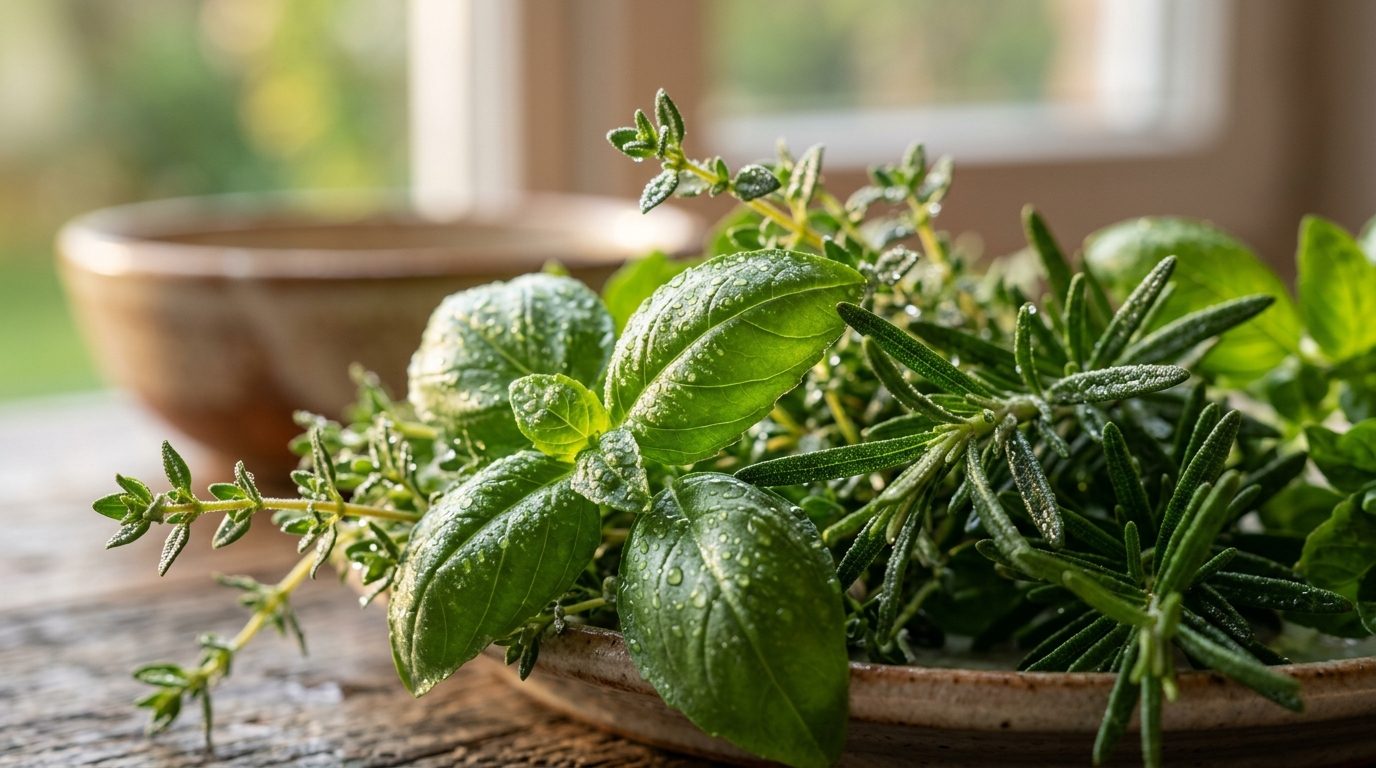
While outdoor planters such as our fall container garden ideas and container spring bulbs respond to seasonal weather changes, indoor windowsill herb gardening provides steady, controllable microclimates. By matching each culinary variety to its ideal potting porosity, light exposure, and pruning cadence, you can enjoy robust harvests without suffering from weak, leggy stems or powdery mildew.
Why You’ll Love an Indoor Windowsill Herb Garden
- Instant Farm-to-Table Freshness: Elevates home cooking with intense essential oils and fresh aromas that store-bought plastic herb clamshells simply cannot match.
- Zero Food Waste: Snip precisely the two sprigs of thyme or handful of basil leaves you need for a recipe, leaving the living root system to continuously regenerate.
- Year-Round Living Decor: Warms kitchen sightlines with rich emerald foliage and organic terracotta vessels that complement artisan interiors and warm earthy decor styling.
- Effortless Daily Maintenance: Placing herbs right beside your kitchen sink makes hydration, harvesting, and pest monitoring an effortless part of your daily routine.
Supplies, Soil Formulation & Herb Selection

Indoor herbs fail primarily due to two factors: inadequate root aeration and lack of direct sunlight. Choosing individual breathable pots rather than overcrowding plants into a single trough ensures each herb’s unique watering needs are respected:
- The Containers: 4.5 to 6-inch unglazed terracotta pots with bottom drainage holes and matching drip saucers. Terracotta allows moisture to evaporate through pot walls, preventing soggy root rot.
- The Indoor Soil Formula: Standard dense garden soil compacts inside containers. Mix 70% high-grade indoor potting soil (containing peat moss or coco coir) with 30% coarse perlite or pumice to ensure rapid drainage.
- Genovese Basil: The heavyweight champion of kitchen herbs. Demands 6+ hours of full direct sun and consistently moist, well-drained soil.
- Tuscan Rosemary: A woody Mediterranean perennial that prefers drier soil; allow the top 2 inches of soil to dry out between waterings.
- French Thyme: Drought-tolerant with fine aromatic leaves; thrives in gritty soil and medium-to-bright light.
- Italian Flat-Leaf Parsley: Thrives in cool morning sun and even moisture; rich in bright herbaceous flavor.
Step-by-Step Planting & Care Walkthrough
1. Pot Preparation: Place a small piece of mesh screen or broken ceramic shard over each pot’s drainage hole. Add 2 inches of the pre-moistened perlite-soil blend into the base.
2. Teasing Nursery Roots: Gently slide your nursery herb start from its plastic pot. Loosen compacted root balls with your fingertips to encourage outward root exploration in the new container.

3. Planting & Setting Depth: Center the root ball in the terracotta pot, backfilling with soil until the plant sits level with 1/2 inch of headspace below the rim. Press the soil gently to eliminate air pockets, then water thoroughly until water flows into the drainage saucer.
4. The “Node Pinching” Secret: Never pluck individual bottom leaves. Instead, use clean herb snips to trim the central top stem just 1/8-inch above a set of twin leaves. This removes apical dominance, stimulating two new branches from the node below and preventing spindly, flowering growth.
5. Weekly Rotation: Houseplants bend toward sunlight. Rotate each terracotta pot 90 degrees every Sunday morning to promote balanced, vertical 360-degree growth.
3 Indoor Herb Master Secrets
1. Bottom-Watering Prevents Fungus Gnats: Surface moisture attracts pesky fungus gnats. Water your herbs by pouring 1 inch of water directly into their drainage saucers. Let the root system wick water upward for 30 minutes, then discard any remaining standing runoff.
2. Boost Winter Light with a Mini Clip-On Grow LED: Between November and February, northern windows receive less than 4 hours of usable daylight. Supplement your windowsill with a discrete 3000K warm-white LED halo grow light set on an 8-hour timer to prevent winter dormancy.
3. Never Harvest More Than One-Third at Once: While frequent snipping encourages growth, taking more than 30% of a plant’s total foliage shocks the root system. Always leave enough canopy for photosynthesis.
The Finished Windowsill Garden Scene

Combined with organic home accents like our DIY textured stone vases or seasonal greenery, an indoor herb garden grounds your kitchen with warmth, practical utility, and restorative daily beauty.
Indoor Culinary Herb Companion Guide
| Herb Variety | Light Requirement | Watering Schedule | Best Harvesting Technique |
|---|---|---|---|
| Genovese Basil | 6–8 Hours full sun | Keep evenly moist; bottom-water | Pinch top leaf nodes every 10 days |
| Tuscan Rosemary | 6+ Hours direct sun | Allow top 2 inches to dry fully | Snip top 2 inches of tender new shoots |
| French Thyme | 5–6 Hours bright light | Allow soil to dry slightly | Cut outer stems 1 inch above soil base |
| Italian Flat-Leaf Parsley | 4–6 Hours morning sun | Consistently moist; never soaked | Cut outermost mature stems at soil level |
Frequently Asked Questions
Why are the bottom leaves of my windowsill basil turning yellow?
Yellowing lower leaves typically indicate overwatering or poor drainage. Ensure your pot has an open drainage hole, allow the top inch of soil to dry between waterings, and ensure the pot never sits in stagnant runoff in its saucer.
Can I start an indoor herb garden from seeds or nursery starters?
For windowsill gardening, nursery starter plants are far more successful than seeds. Seeds require high soil heat and intense germination lights, whereas small starter plants have established root systems ready to thrive immediately on a sunny sill.
How do I prevent indoor herbs from becoming tall and leggy?
Leggy, stretched stems mean the plant is desperately reaching for light. Move the container to a South-facing window, prune back the terminal stem tips to stimulate compact branching, and supplement with an inexpensive clip-on grow lamp during gloomy winter days.
Pin This Indoor Herb Garden Guide for Later
Dreaming of fresh culinary herbs on your kitchen counter? Save this indoor windowsill herb garden guide to your kitchen decor or indoor gardening boards on Pinterest so you always have these watering and pruning formulas on hand!
Leave a Comment