
When the late afternoon light softens and autumn chill settles against the windows, pausing to brew a pot of loose leaf herbal tea is one of the simplest domestic rituals you can practice. Stepping away from glowing screens to measure whole dried flowers, listen to water boil, and watch amber botanicals gently unfurl transforms an ordinary hot drink into a deliberate mindful reset. With just a handful of wholesome herbs, clean filtered water, and five quiet minutes of steeping, you can craft a rich, aromatic cup that warms your afternoon without jittery caffeine.
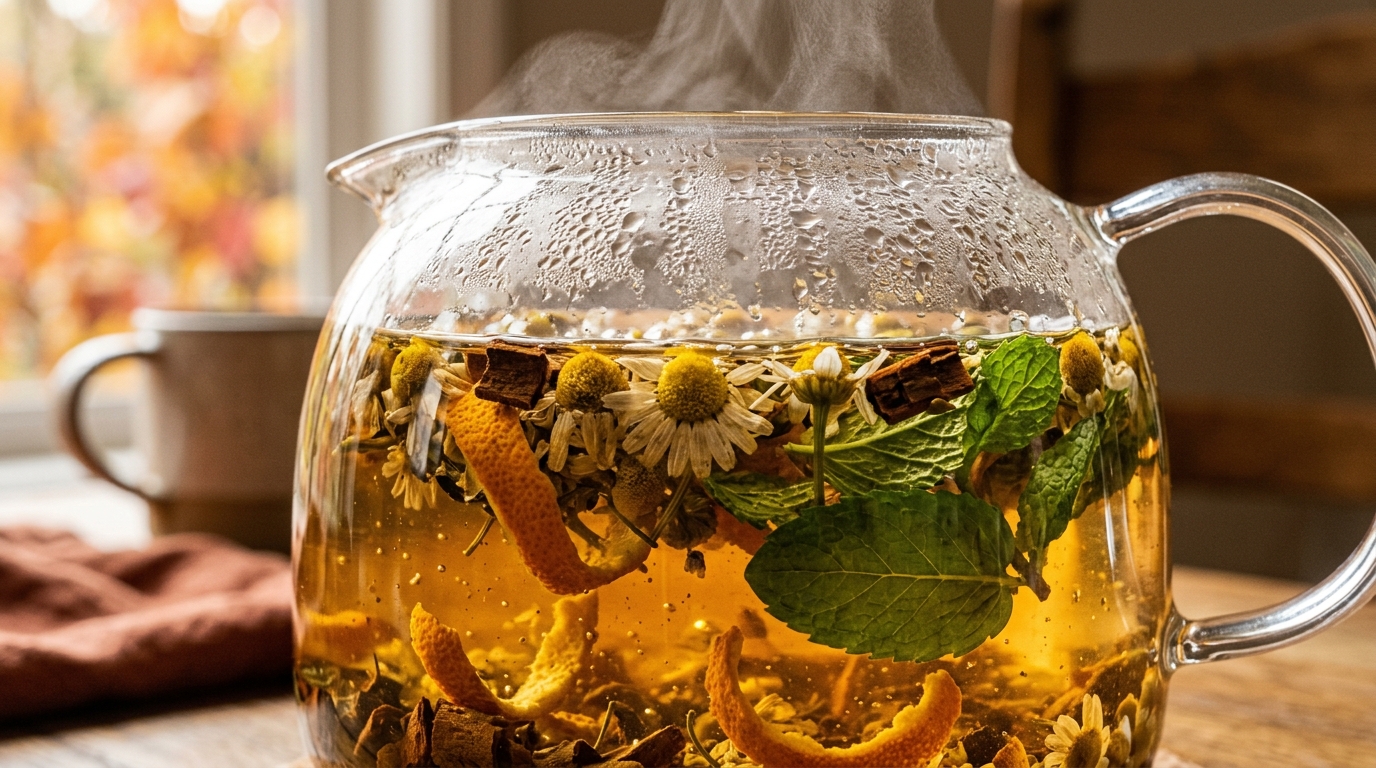
While commercial tea bags offer quick convenience, they often contain finely crushed fannings and dust that release bitter tannins quickly while lacking the rich nuanced flavors of whole leaves. Brewing whole loose botanicals allows flowers, roots, and dried peels to expand fully in hot water, yielding a noticeably sweeter, rounder infusion. Whether you enjoy a brisk cup while working from home or a gentle warm blend before turning down the bed, establishing a mindful tea rhythm anchors your day with comforting predictability.
Why Whole Loose Botanicals Make Better Tea
Transitioning from mass-produced paper sachets to whole loose botanicals is an accessible upgrade that delivers clearer flavor, better aroma, and less household waste. Here is why taking the extra minute for loose leaf makes such a difference:
- Intact Essential Oils: Whole dried chamomile heads, peppermint leaves, and dried citrus peels retain their natural aromatic oils until hot water gently releases them into your cup.
- Freedom to Custom Blend: You can adjust ratios to suit your exact mood—adding an extra pinch of peppermint for a crisp finish or a sliver of cinnamon bark for warmth.
- A Calming Sensory Pause: Much like our mindful French press morning coffee ritual, the tactile steps of heating water, measuring herbs, and waiting for the steep create a gentle buffer against daily rushing.
- Pairs Naturally with Evening Rhythms: Loose herbal tea harmonizes seamlessly with an autumn evening wind-down routine, providing a warm, comforting beverage free from stimulating caffeine.
Essential Teaware for a Simple Home Setup
You do not need elaborate antique teaware to enjoy loose leaf tea. A few thoughtfully chosen pieces ensure your herbs have ample room to circulate while keeping clean-up effortless:

| Tool / Item | Recommended Choice | Practical Purpose |
|---|---|---|
| Deep Basket Infuser | Fine stainless steel or brass mesh basket with wide rim | Sits directly inside your favorite mug and gives dense botanicals plenty of room to circulate freely. |
| Temperature Kettle | Gooseneck or standard kettle with temperature control | Prevents scorching delicate leaves like mint and green rooibos with rolling boiling water. |
| Heavy Stoneware Mug | Ceramic or clay mug with comfortable handle | Retains comforting heat longer through slow autumn afternoons and feels pleasant in your hands. |
| Small Saucer or Lid | Ceramic saucer or silicone mug cover | Traps aromatic steam during the 5-minute steep and serves as a resting dish for the used strainer. |
4 Wholesome Autumn Herbal Blends to Try
Building your own loose leaf blends at home allows you to use fresh seasonal pantry staples. Store these wholesome botanicals in airtight amber glass jars away from direct heat:
- Golden Orchard Comfort: 1 tablespoon whole chamomile flowers + 1 small cinnamon stick chip + 1/2 teaspoon dried orange peel. Sweet, mellow, and lightly spiced.
- Crisp Garden Mint: 1 tablespoon dried whole peppermint leaves + 1/2 teaspoon dried lemon verbena or lemon balm. Refreshing, clean, and clarifying after lunch.
- Warm Autumn Hearth: 1 tablespoon green or red rooibos + 1/2 teaspoon crushed ginger root + 2 whole cloves. Rich, earthy, and naturally full-bodied without caffeine.
- Calm Twilight Bloom: 1 tablespoon dried lavender blossoms + 1 tablespoon chamomile flowers + pinch of dried rose petals. Soft, fragrant, and ideal for late evening wind-down.
Step-by-Step Brewing Routine for the Perfect Cup
Brewing herbal infusions differs slightly from true tea (Camellia sinensis). Because herbal blends contain durable roots and delicate flowers together, consistency in temperature and timing ensures balanced flavor without bitterness:
1. Heat Fresh Filtered Water: Fill your kettle with clean, cold filtered water. For delicate herbal leaves like mint or chamomile, bring water to just below boiling—around 200°F to 205°F (93°C to 96°C). If you do not have a temperature kettle, simply bring the water to a boil, remove it from the heat source, and let it rest for thirty seconds before pouring.

2. Measure the Botanicals: Use 1 to 1.5 rounded tablespoons of loose dried herbs per 8 ounces of water. Because loose flowers and fluffy leaves take up significantly more volume than dense rolled tea leaves, do not hesitate to use a generous measure. Place the herbs into your deep basket infuser inside the mug.
3. Pour and Cover Immediately: Pour the hot water slowly over the botanicals, ensuring they are fully submerged. Immediately place a ceramic saucer or small lid over the mug. Covering the vessel traps the rising vapor, ensuring that volatile aromatic oils condense back into your tea rather than dissipating into the kitchen air.
4. Steep for 5 to 7 Minutes: Unlike green or black tea, which can become unpleasantly astringent if steeped too long, most herbal infusions benefit from a generous 5 to 7-minute steep. Dense roots (like ginger or licorice) can steep up to 10 minutes without turning bitter.
5. Lift, Drain, and Enjoy: Lift the basket infuser straight up and allow the liquid to drain naturally into the mug for five seconds. Avoid pressing the wet botanicals with a spoon, which can release cloudy sediment. Set the infuser on your saucer, breathe in the steam, and take your first slow sip.
Creating an Intentional Afternoon Tea Pause
The true value of a tea ritual lies in giving yourself permission to slow down. Rather than carrying your mug back to a cluttered computer screen, take five deliberate minutes to sit in a quiet corner:

Pairing your afternoon tea with our clean beeswax candle burning tips and taking a few moments with our autumn journaling prompts creates an accessible pocket of calm in the middle of a busy week. On grey, overcast days, it pairs just as comfortably with our grounding indoor rainy day rituals.
Botanical Storage & Freshness Tips
Dried herbs are sensitive to heat, moisture, and light. Follow these simple guidelines to keep your loose leaf tea tasting vibrant throughout the cooler months:
- Keep in Opaque or Amber Glass: Clear glass jars displayed on open shelves expose delicate botanicals to UV light, which bleaches colors and degrades subtle flavors within weeks. Choose dark amber jars or airtight metal tins.
- Store Away from Steam and Stove Heat: Avoid storing tea directly above your stove or near a kettle where rising cooking steam can introduce moisture into the jars. A dedicated pantry drawer or dry cabinet is ideal.
- Compost Spent Leaves: Used chamomile flowers, mint leaves, and rooibos make wonderful additions to your outdoor garden compost or indoor potting soil mulch.
Frequently Asked Questions
Can I re-steep loose leaf herbal tea?
Yes! Most high-quality whole loose herbal blends can be re-steeped a second time within an hour of the first brew. Simply add fresh hot water and extend the steeping time by two additional minutes for a lighter, pleasant second cup.
Should I sweeten herbal tea with honey or sugar?
While high-quality whole herbs are naturally sweet and aromatic on their own, a half-teaspoon of raw wildflower honey pairs exceptionally well with chamomile and cinnamon. Add honey only after the tea has cooled slightly so the heat does not overpower its delicate taste.
How long do dried herbs stay fresh?
Stored properly in airtight amber glass jars away from heat, whole dried herbs maintain their peak aroma and vibrant flavor for 9 to 12 months. Crush a few leaves between your fingers—if the scent is fragrant and sharp, the herbs are still fresh.
Pin This Tea Ritual Guide for Later
Love peaceful autumn afternoons? Save this loose leaf tea brewing guide to your Pinterest board so you have the temperature guidelines and blend ideas ready whenever you need a mindful reset!
Leave a Comment