
The kitchen island is undeniably the social heartbeat and culinary anchor of the modern home, yet styling its expansive quartz or marble expanse often presents a delicate balancing act. Leave it completely bare, and the space feels sterile and unlived-in; crowd it with decorative clutter, and everyday meal prep becomes an exercise in frustration. By embracing the principles of organic modern styling—layering tactile reclaimed wood, artisan ceramics, warm unlacquered brass, and living botanicals—you can curate an effortlessly elegant centerpiece that elevates your kitchen without impeding functionality.
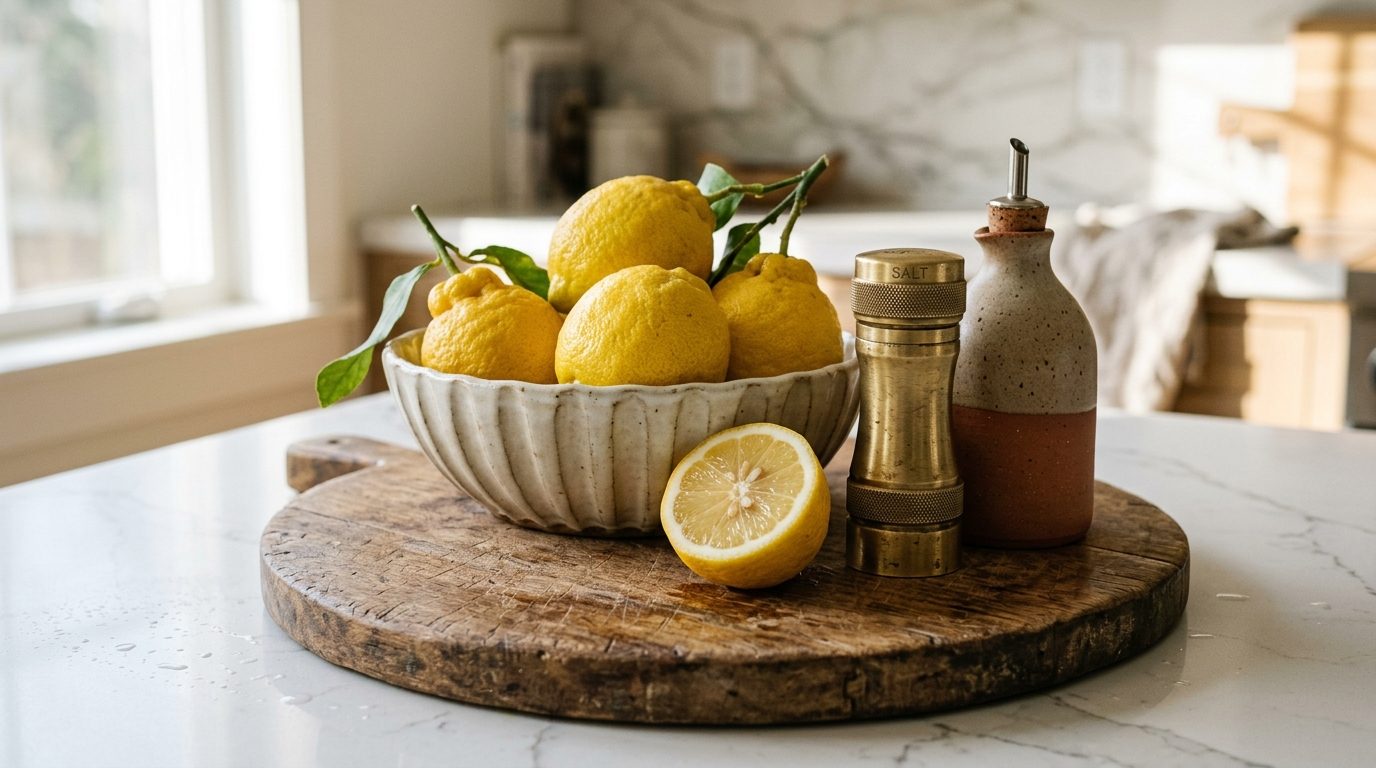
Just as our small living room layout guide relies on deliberate proportions to keep open floor space feeling intentional, kitchen island styling depends on “contained grouping.” Rather than scattering loose accents across your island countertop, housing objects on a single tactile wooden tray or board creates a singular focal anchor that is instantly portable when dinner prep begins.
Why You’ll Love Organic Modern Island Styling
- Instant Cleanliness & Portability: Grouping decor on a single board means you can lift the entire centerpiece in one second when you need the counter clear for baking or rolling dough.
- Warmth Against Cool Stone: Balances cold, polished quartz and marble with the rustic grain of vintage oak, linen fibers, and raw terracotta.
- Celebrates Daily Culinary Living: Showcases items you actually use—handcrafted salt cellars, cold-pressed olive oils, and fresh herbs from your indoor windowsill herb garden—as refined works of art.
- Seasonal Versatility: Effortlessly shifts throughout the year by swapping lemons for persimmons in autumn, or olive branches for winter cypress.
The Material Palette & Core Styling Elements

Creating an authentic organic modern aesthetic requires contrasting earthy, rustic finishes with clean architectural planes. Avoid slick plastics or glossy painted decor; focus on genuine natural patinas:
- The Anchor Board (Vintage Walnut, Oak, or Teak): A 16 to 20-inch round end-grain cutting board or French charcuterie paddle. Natural knife marks and weathered wood grain infuse character into crisp white kitchens.
- The Low Vessel (Chalky Stoneware or Fluted Pottery): A shallow, wide ceramic fruit bowl with an unglazed exterior. Hand-pinched pottery or vessels styled with our DIY textured stone technique provide sculptural mineral depth.
- Culinary Accents (Warm Metals): Heavy brass Greek pepper mills, a ribbed glass olive oil cruet with a cork spout, or a marble pinch pot for Maldon sea salt.
- Organic Softener (Washed Belgian Linen): A single folded tea towel in natural oatmeal, flax, or subtle blue windowpane stripe draping casually beneath the bowl.
- Architectural Foliage (Living Greens): A heavy ceramic vase housing 2 to 3 tall wild olive branches, fig leaf stems, or blooming pear branches for organic vertical lift.
5 Designer Rules for Styling Your Kitchen Island
1. The 60/40 Functional Rule: Never cover more than 20% to 25% of your island’s total surface with decorative elements. Maintain at least 60% of clear, uninterrupted counter expanse on the working side of the island so the kitchen remains a functioning workspace.
2. Offset Positioning (Avoid the Dead Center): Placing your arrangement dead center in the middle of a large island often looks rigid and staged. Instead, position your styled vignette slightly to one third of the island’s length, angled subtly toward the room’s main entrance.

3. The “Rule of Threes” Height Variation: Every compelling kitchen vignette requires three distinct elevation levels: a low foundation (the cutting board), a medium mid-tier (the bowl of fruit or bread basket), and an airy vertical element (the vase with leafy branches) that reaches halfway to the pendant lights.
4. Fresh, Edible Produce Over Faux Plastic: Never use synthetic plastic fruit. Fill your stoneware bowl with real organic Meyer lemons, Bosc pears, green apples, or heirloom garlic bulbs. Real fruit breathes organic color and natural scent into the culinary air.
5. Match Pendants to Hardware Tones: Let your island decor echo the materiality of your lighting. If you have unlacquered brass or aged bronze pendant lights hanging overhead, incorporate a brass pepper mill or bronze candle snuffer into your vignette to complete the vertical aesthetic dialogue.
The Finished Organic Modern Kitchen Scene

By connecting your kitchen styling with broader residential themes—such as the organic textures seen in our warm earthy living room ideas—your home maintains a cohesive, serene rhythm from the foyer to the cooking hearth.
Seasonal Island Styling Calendar
| Season | Bowl Produce Anchor | Foliage / Branch Selection | Textile Tone |
|---|---|---|---|
| Spring | Green Artichokes, Limes, White Peaches | Flowering Quince or Cherry Blossom stems | Crisp Bleached White Linen |
| Summer | Heirloom Vine Tomatoes, Lemons | Wild Olive Branches or Fresh Mint Bundles | Natural Oatmeal Linen |
| Autumn | Bosc Pears, Pomegranates, Persimmons | Preserved Rust Beech Leaves or Dried Wheat | Caramel / Terracotta Washed Linen |
| Winter | Blood Oranges, Walnuts in Shell | Noble Fir, Cedar, or Berry Sprigs | Deep Olive / Charcoal Waffle Linen |
Frequently Asked Questions
How do I keep tall kitchen branches from tipping over in a vase?
Use a heavy stoneware or ceramic jug rather than lightweight glass. Add 2 to 3 inches of river stones or a heavy florist pin frog (kenzan) inside the bottom of the vessel before inserting branches to anchor the center of gravity against accidental knocks.
What is the best wood for a decorative kitchen cutting board?
Walnut, French oak, and teak are ideal choices. They possess high natural oil contents, tight grain patterns that resist moisture staining, and a rich, mature wood grain that ages gracefully with exposure to kitchen sunlight.
How do I protect my quartz countertop from scratches when sliding boards?
Attach four small, self-adhesive clear silicone bumper pads or felt dots to the underside corners of your wooden board. This elevates the wood 2 millimeters above the quartz, preventing surface scratches and allowing air circulation to stop trapped water rings.
Pin This Kitchen Island Styling Guide for Later
Looking to refresh your kitchen counters? Pin this organic modern island styling guide to your kitchen decor or interior design boards on Pinterest so you can reference these material pairings and height formulas whenever you restyle!
Attempted this as my first ever home decor crochet project! My tension was a tiny bit uneven in the beginning, but your photos made following along so straightforward. Already picking yarn colors for the next one!
Welcome to home crochet! Honestly, small tension quirks give handmade pieces so much character and soul. You should be super proud of your first piece!