
There is an unmistakable sense of grounding when you step into a living space wrapped in sun-baked clay, unrefined timber, and breathable, tactile textiles. If sterile gray walls and cold minimalist layouts have left your home feeling clinical, transitioning toward a nature-inspired aesthetic offers the ultimate restorative antidote. Curating warm earthy living room decor ideas is not simply about splashing beige paint on drywall—it is an intentional, layered formula combining tactile diversity, precise lighting temperatures, and proportion-based styling rules to create a space that feels calm, luxurious, and deeply welcoming.
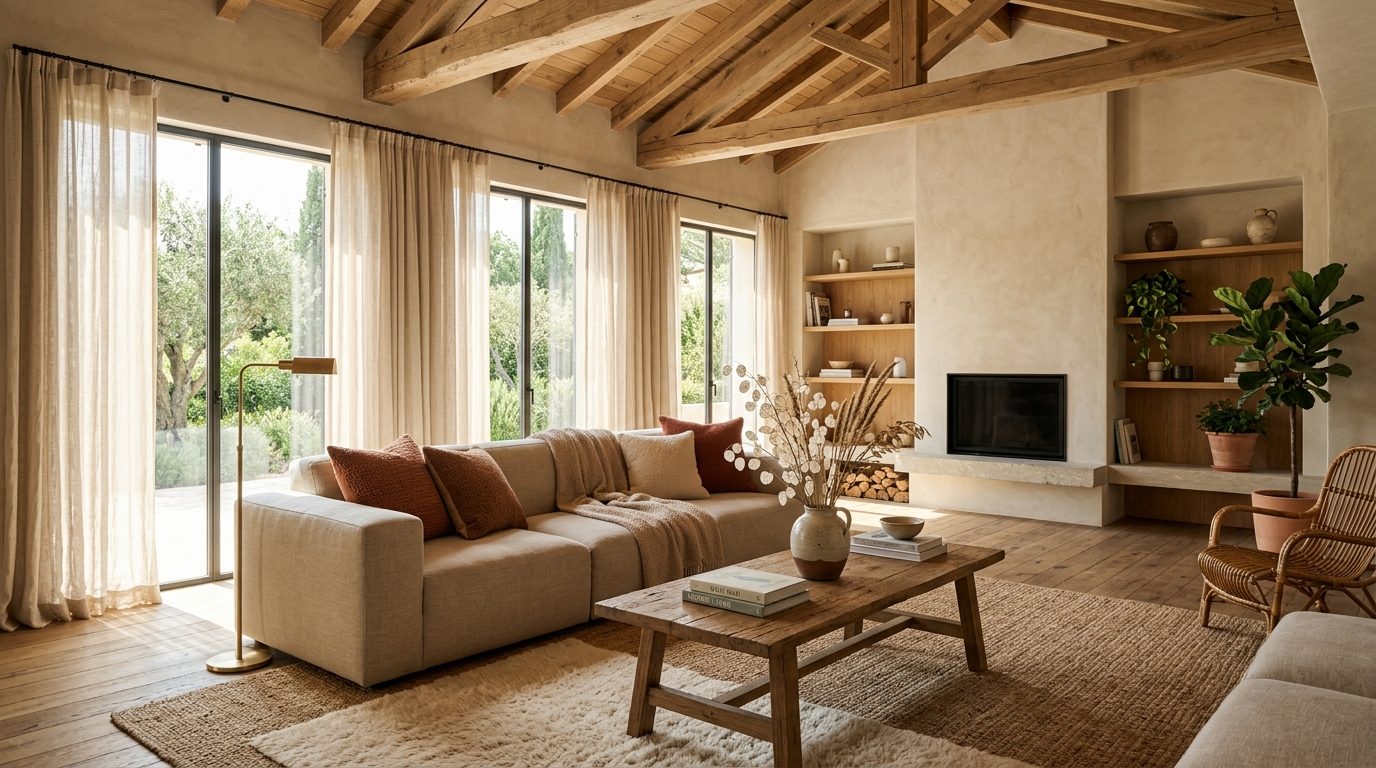
Whether you are designing from scratch or refreshing an existing space on a budget, here is the complete designer styling blueprint—complete with real paint codes, dimensional formulas, and high-impact placement rules.
Tip 1: Anchor the Palette with the 60-30-10 Rule (Plus Real Paint Codes)
An authentic earthy interior succeeds because of temperature balance. Relying on a single neutral makes a room feel flat, while using too many competing tones creates chaos. Instead, structure your palette around the proven 60-30-10 design formula:

- 60% Dominant Base (Walls, Large Sectional & Base Rug): Warm creamy whites, soft oatmeal, or chalky pale sand.
- 30% Secondary Earth Tones (Accent Furniture, Drapery & Woodwork): Muted sage, raw honey oak, rich walnut, and olive green.
- 10% Accent High-Impact Notes (Pottery, Pillows & Hardware): Sun-baked terracotta, brushed unlacquered brass, and iron black.
To take the guesswork out of color selection, here are five designer-favorite paint colors with proven earthy undertones:
| Role in Room | Paint Brand & Exact Code | Undertone & Why It Works |
|---|---|---|
| Foundational Base | Benjamin Moore Swiss Coffee (OC-45) | Creamy warm off-white without harsh yellow tint; bounces daylight beautifully. |
| Cozy Neutral Wall | Sherwin-Williams Alabaster (SW 7008) | Soft beige undertone; provides a cozy envelope in rooms with northern light. |
| Earthy Accent / Clay | Sherwin-Williams Redend Point (SW 9081) | Warm desert terracotta-blush with grounding gray-brown undertones. |
| Nature’s Neutral | Sherwin-Williams Evergreen Fog (SW 9130) | Calming chameleon gray-green that pairs effortlessly with warm leather and brass. |
| Rich Plaster / Clay | Farrow & Ball Setting Plaster (No. 231) | Muted sun-baked Venetian plaster aesthetic; flatters wood furniture at all hours. |
Tip 2: Prioritize Tactile Diversity Over Monotone Flatness
When you strip away synthetic bright colors, texture must step up to carry the emotional weight of the room. The secret to that effortless, curated designer look is mixing at least four contrasting tactile finishes in close proximity.

Avoid slick microfibers, glossy laminates, and faux polished stones. Instead, layer nubby bouclé or shearling upholstery alongside breathable slub linen curtains, raw travertine coasters, and unvarnished wire-brushed oak that showcases the natural wood grain knots.
Tip 3: Apply the “8-to-12 Inch” Dual-Rug Layering Formula
A frequent living room mistake is purchasing a rug that floats like a tiny postage stamp in the center of the room. To anchor an earthy living area and soften hardwood or tile acoustics, deploy a two-layer rug system with exact proportions:

- The Foundation Rug (Jute or Sisal): Measure your seating area and choose a size (typically 8×10 or 9×12) that extends at least 8 to 12 inches past the sides of your sofa. All front legs of armchairs and sofas must rest comfortably on top.
- The Accent Rug (High-Pile Wool or Vintage Kilim): Layer a smaller 5×8 or 6×9 plush wool or faded vintage runner directly over the center of the jute rug. This adds immediate barefoot comfort where you actually sit.
Tip 4: Style the Coffee Table with the Proportional “Rule of Thirds”
A cluttered coffee table feels chaotic, but leaving it bare makes a room feel cold. Balance your surface by dividing it into three intentional visual stations that vary in height, architectural weight, and sensory appeal:
- Station 1 (Height & Organic Movement): An artisanal ceramic vase containing branches that stand approximately 1.5 times the vase height.
- Station 2 (Horizontal Anchor): Two to three oversized hardcover art or architecture books stacked horizontally, crowned with a wood bead garland or stone object.
- Station 3 (Tactile & Sensory Container): A carved travertine or fluted marble tray holding an amber glass cedar candle, matches, and a small brass dish.
Tip 5: Ditch Overhead Fixtures for 2700K Ambient Layered Lighting
Lighting can make or break an earthy palette. Cool-toned LED bulbs (3500K–5000K) instantly wash out organic pigments, turning rich terracotta into muddy mauve and warm oak into pale ash. To preserve the soothing atmosphere, enforce two strict rules:
- The 2700K Kelvin Standard: Equip every living room lamp fixture exclusively with warm white LED bulbs rated at 2700K (or 2200K vintage amber filament bulbs for mood lamps).
- The Three-Point Eye-Level Triangle: Turn off harsh ceiling cans after dusk. Instead, position a tall arched floor lamp in an empty corner, a ceramic lamp on a console, and a shaded task lamp on a side table to create a soft, welcoming triangle of light.
Tip 6: Introduce Oversized Preserved Botanicals (The 1.5x Rule)
Brightly dyed plastic houseplants with glossy leaves clash with earthy, organic textures. Instead, incorporate real elements of nature through sculptural dried branches that require zero water and last indefinitely:
- Preserved Olive Stems: Silvery-green leaves that introduce foliage color without overwhelming light oak and oatmeal tones.
- Dried Silver Dollar Eucalyptus: Provides textural, cascading leaf clusters and a subtle, natural herbal aroma.
- Wild Meadow Grasses: Arranged in a heavy unglazed floor urn to draw the eye upward and accentuate ceiling height.
Tip 7: Master the “2-2-1” Cushion Stacking Formula
Throw pillows are the easiest way to inject rich earthy hues without committing to costly upholstery. Avoid matching 4-piece sets from retail packages. Instead, follow the designer 2-2-1 pillow stacking formula on your main sofa:
- Two 22×22″ Base Pillows (The Anchors): Heavyweight oatmeal slub linen or woven neutral wool positioned in each back corner of the sofa.
- Two 20×20″ Layering Pillows (The Contrast): Rich terracotta corduroy, burnt rust waffle-knit, or deep olive velvet layered directly in front.
- One 14×22″ Lumbar Pillow (The Centerpiece): A distressed saddle-leather or artisan mudcloth lumbar centered in the middle of the couch.
Pro Tip: Always purchase pillow inserts that are 2 inches larger than your cushion covers (e.g., a 24×24 insert for a 22×22 cover) filled with feather-down or down-alternative for a plush, karate-chopped look.
Budget vs. Splurge Breakdown: Where Quality Truly Counts
You do not need a luxury showroom budget to achieve an organic aesthetic. The trick is knowing which pieces require structural investment and which items can be thrifted or DIYed:
| Design Element | Where to Splurge (Invest) | Where to Save (Budget & Thrift) |
|---|---|---|
| Main Seating | A high-density foam, kiln-dried hardwood sofa in performance oatmeal linen or textured tweed. | Secondhand mid-century wood armchairs sanded, restained with Danish oil, and reupholstered. |
| Area Rugs | An oversized, durable 100% natural fiber chunky jute base rug (8×10 or 9×12). | Thrifted vintage kilims, estate-sale faded runners, or washed cotton rugs layered on top. |
| Lighting | One sculptural statement floor lamp in aged brass or fluted stone that acts as sculpture. | Thrift-store ceramic lamps updated with textured stone spray paint and pleated linen shades. |
| Wall Art & Ceramics | Custom-framed minimalist architectural prints or a large handwoven textile wall hanging. | DIY joint-compound textured canvas art and gathered vintage terracotta plant pots. |
Small Space & Apartment Adaptations
If you live in a smaller apartment or rental, earthy styling can make your layout feel expansive rather than crowded by following three optical tweaks:
- Choose Legged Furniture: Choose sofas and sideboards elevated on slim oak or black iron legs. Seeing open floor beneath furniture tricks the brain into perceiving more square footage.
- Mount Drapes Ceiling-High: Hang sheer linen curtain rods directly below the ceiling crown molding rather than at the top of the window frame. Floor-to-ceiling drapery draws eyes upward and magnifies vertical scale.
- Use Wall-Mounted Floating Shelves: Swap bulky bookcases for floating natural wood shelves to display ceramics and trailing plants without taking up precious floor footprint.
Frequently Asked Questions
What paint colors are best for an earthy living room?
The most versatile paint colors for an earthy living room balance warm undertones without looking yellowish. Top designer picks include Benjamin Moore Swiss Coffee (OC-45) for warm creamy walls, Sherwin-Williams Alabaster (SW 7008) for a cozy neutral envelope, and Sherwin-Williams Redend Point (SW 9081) for an artisanal clay or terracotta accent.
How do I make my living room look earthy on a tight budget?
Focus on textile upgrades and lighting first. Replace harsh cool bulbs with 2700K warm LEDs, thrift inexpensive ceramic vases and coat them with baking-soda paint for a terracotta effect, forage dried branches from outdoors, and invest in a chunky natural jute rug to anchor the floor.
How do you prevent an earthy living room from looking dark or dated?
The key is maintaining the 60-30-10 ratio and incorporating reflective accents. Ensure 60% of your room remains a light warm neutral (oatmeal, cream, or sand) rather than dark brown. Pair heavy woods with sheer, light-filtering linen curtains and unlacquered brass hardware to bounce light throughout the room.
📌 Save This Living Room Guide to Pinterest
Designing your dream sanctuary? Pin this guide to your Living Room Inspo or Earthy Home Decor board on Pinterest so you have the color formulas, paint codes, and styling rules ready when you shop!
Save To PinterestCrafting a Home with Enduring Soul
Designing an earthy, organic living room is an ongoing creative pursuit of collecting elements that make you feel centered, grounded, and at ease. Rather than attempting to curate every corner in a single shopping trip, begin with your tactile foundation—a deeply comfortable sofa, layered natural rugs, and calming 2700K lighting. From there, allow handcrafted ceramics, textured textiles, and living greenery to find their natural place over time.
Leave a Comment