
Nothing tests the flow of a home dining room quite like Thanksgiving dinner. When ten to fourteen hungry family members squeeze around a crowded dining table laden with heavy roasting pans, bubbling casseroles, and bread baskets, passing dishes across the centerpiece quickly turns chaotic. Designing an intentional thanksgiving buffet table setup along a separate sideboard or kitchen island completely changes your hosting dynamic. It liberates your main seated tablescape for conversation and creates a smooth, self-serve flow where every holiday dish looks enticing and stays warm.
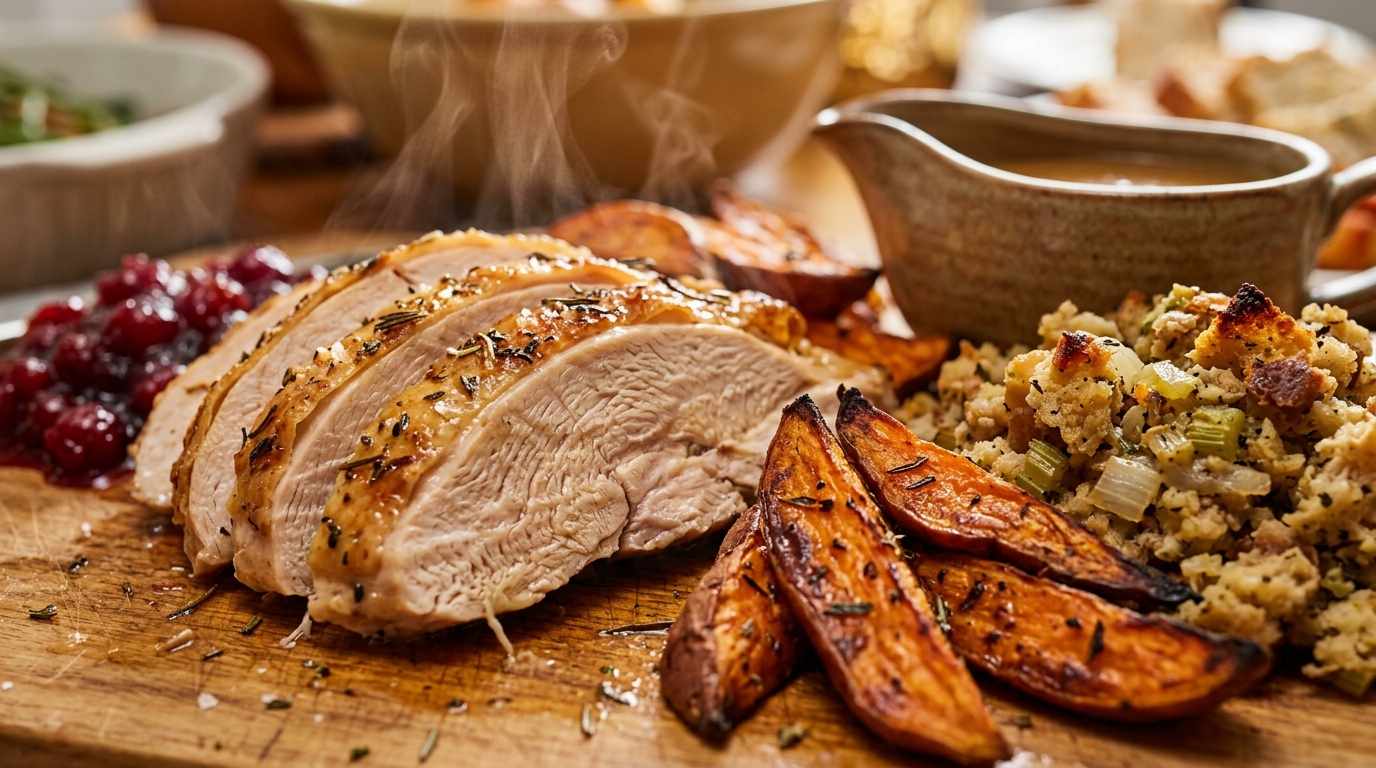
The secret to an effortless holiday buffet is treating your serving surface like a well-engineered staging area rather than an accidental parking lot for cookware. When you separate cold appetizers, hot mains, and dessert stations into distinct zones, guests navigate the spread naturally without bumping elbows. Paired with our Thanksgiving place setting styling guide for your dining table and our Thanksgiving centerpiece styling guide, this buffet layout ensures your holiday meal runs with genuine hospitality. Here is my step-by-step blueprint to orchestrate a polished, stress-free holiday buffet station.
Why a Dedicated Buffet Station Outperforms Crowded Sit-Down Tables
Family-style service sounds romantic in theory, but in practice, passing twenty pounds of hot cast iron and stoneware over delicate drinking glasses creates immediate friction. Moving the food to a dedicated station offers three distinct advantages:
- Uncluttered Dining Tables: Your sit-down table remains relaxed, airy, and beautiful. Guests can rest their elbows, admire low centerpiece greenery, and enjoy unobstructed sightlines across from one another without ducking under a mountain of side dishes.
- Pacing Control for Second Helpings: Guests can easily stand up to grab extra scoops of stuffing or cranberry sauce at their own pace without interrupting someone else’s conversation to ask for a dish to be passed.
- Food Safety & Heat Management: Keeping bubbling casseroles on insulated trivets or warming trays protects your good dining table linens and wood finishes from scorch marks and gravy spills.
Countertop Traffic Flow: Plates, Hot Mains & Carving in 4 Zones
The biggest mistake in holiday buffet design is putting silverware and napkins at the very beginning of the line. Guests should never have to juggle loose knives and forks while trying to ladle gravy with their free hand. Set up your station in a strict one-way assembly flow:

- Zone 1: The Plate Launchpad (Start of Line): Stack dinner plates in two neat tiers of six to eight plates each rather than one tall, wobbly tower. Position fresh dinner rolls and soft butter right beside the plates so guests can create an edible foundation before reaching hot food.
- Zone 2: Starches & Hearty Sides: Place your heaviest dishes next. Large oval platters of herbed bread stuffing, mashed potatoes, and our tested sheet pan roasted sweet potatoes anchor this section with wide serving spoons.
- Zone 3: The Carving Anchor & Sauces: Position your sliced turkey or roasted protein toward the middle-right. Place gravy boats and ruby cranberry sauce immediately following the meat. Always set a small ceramic spoon rest directly beneath the gravy ladle to catch inevitable drips.
- Zone 4: The Cutlery Landing Strip (End of Line): Place rolled napkins tied with twine around forks and knives at the very end of the buffet, or better yet, pre-set flatware directly on the dining table. This allows guests to keep both hands free while filling their plates.
The Vertical Layering Trick: Using Wooden Risers & Trivets for Visual Depth
If all your serving dishes sit flat on the table, your buffet looks crowded and guests must reach awkwardly over front platters to scoop back dishes. Building three distinct heights creates visual balance and ergonomic ease:

- High Level (4 to 6 inches): Use sturdy wooden crates, upturned sturdy baskets, or butcher blocks at the rear edge of the sideboard for large baking dishes like green bean casserole or warm roasted vegetables.
- Mid Level (2 to 3 inches): Low wooden risers or slate cheese slabs placed in the center row hold side platters and artisan breads.
- Ground Level (Table Height): Keep the heaviest platters—such as the whole carved turkey platter—at counter height in the front foreground for safe, stable scooping.
Heat Retention Strategy: Chafing Dishes, Slow Cookers & Cast Iron Trivets
A lukewarm holiday dinner is every host’s dread. Because Thanksgiving side dishes take up substantial oven space, you need a passive heating plan to keep everything piping hot through round two:
- The Slow Cooker Mashed Potato Trick: Keep your mashed potatoes or our velvety roasted butternut squash soup in a 4-quart slow cooker set to “Warm”. Stir in an extra splash of warm cream or broth every thirty minutes to keep the texture silky.
- Heavy Enameled Cast Iron: Cast iron holds thermal mass three times longer than standard porcelain ceramic. Bake your casseroles directly in shallow Dutch ovens or enameled cast iron pans and transfer them straight to thick wooden trivets on the buffet line.
- Open Flame Chafing Safety: If you use sternum fuel chafing dishes, ensure they sit on heat-resistant mats at least twelve inches away from draping linen runners, paper napkins, and hanging dried autumn foliage.
Portion Planning & Serving Utensil Allocation for 12 to 14 Guests
Nothing stalls a buffet line faster than guests searching for a missing serving utensil or sharing a single spoon between two dishes. Follow these simple allocation rules:
- Dedicated Utensil per Platter: Never ask guests to share tongs or spoons across platters. Pair tongs with meats and breads; use deep, wide-bowled brass or stainless steel spoons for creamy casseroles and starches.
- Label Everything with Kraft Tent Cards: Handwritten cards placed in front of each platter prevent repetitive questions regarding dietary needs (e.g., “Gluten-Free Herb Stuffing”, “Dairy-Free Roasted Squash”).
- Portion Sizing Math: For a crowd of twelve, plan on 1 to 1.25 pounds of turkey per person, 3/4 cup of stuffing, 1/2 cup of mashed potatoes, and 1/3 cup of cranberry sauce. Having slight surpluses in starches is economical and guarantees cheerful leftovers.
The Make-Ahead Host Timeline: T-Minus 24 Hours to Showtime Carving
Executing an organized buffet begins long before the oven preheats on Thanksgiving morning. Here is my tested prep sequence:

- Day Before (T-Minus 24 Hours): Set up your sideboard furniture. Lay your linen runner, position wooden risers, set empty serving platters in their designated spots, and put sticky notes inside each bowl indicating what dish goes where. Pre-slice breads like our moist cinnamon apple bread and cover with beeswax wrap.
- Morning of (T-Minus 3 Hours): Polish all serving spoons and tongs and place them beside their corresponding bowls. Set dinner plates and napkins in Zone 1. Light unscented candles safely enclosed inside tall glass hurricanes along the sideboard perimeter.
- 30 Minutes Before Serving: Fill warm slow cookers with soups or potato sides. Fill gravy boats with bubbling hot stock gravy. Warm dinner rolls in a cloth-lined basket.
- 5 Minutes Before Bell: Transfer hot casseroles onto wooden trivets, carve and arrange the turkey on the central board, and invite guests to gather with an open plate.
Claire’s Holiday Buffet Q&A: Gravy Drips, Refill Logistics & Cramped Spaces
How do I prevent messy gravy drips all over my nice table runner?
Place a small ceramic coaster or bread plate directly under the spout of the gravy boat and rest the ladle handle on a small spoon rest. A folded linen cocktail napkin tucked beneath the saucer catches any drips before they touch your main runner.
What if my dining room doesn’t have a separate credenza or sideboard?
Convert your kitchen island or an entryway console table into the food station! Clear off all everyday kitchen appliances (toasters, knife blocks) into a pantry cabinet to open up six linear feet of clear counter space.
Can I keep dessert on the buffet table alongside dinner?
It is best to stage dessert elsewhere. Keeping pies and cakes on the main buffet table clutters valuable real estate and encourages guests to rush through dinner. Keep the dessert course hidden in the kitchen until the main plates are cleared.
Save This Thanksgiving Buffet Setup Guide to Pinterest
Planning your upcoming holiday feast? Save this Thanksgiving buffet table setup guide to your Entertaining, Friendsgiving, or Holiday Hosting board on Pinterest so you have these crowd flow blueprints, riser tips, and host timelines ready on Thanksgiving day!
Mapped out our Thanksgiving buffet line on our kitchen island using your two-sided traffic flow layout, and it made the biggest difference! Setting the plates at the start and putting forks and rolled napkins at the dining table instead of the buffet saved people from juggling everything with a hot plate. Zero bottlenecks even with 14 family members in the room!
What is the best way to keep side casseroles warm on a buffet table without bulky chafing dishes?
Hi there! Heavy enamelled cast-iron Dutch ovens or covered stoneware bakers retain heat remarkably well for 45+ minutes. You can also place trivets over electric warming mats hidden beneath a linen runner for a sleek, cozy table that stays piping hot!